The last day of a trip always has its own particular atmosphere. You’re still somewhere else, but home is already on the horizon. The best thing to do is make the remaining hours count without rushing them.
Breakfast: Onigiri
The final morning in Hokkaido started simply and well: Onigiri (おにぎり) for breakfast at Nigirimeshi (にぎりめし) — a handmade onigiri specialist tucked inside Susukino Market, just a short walk from the hotel, that operates 24 hours.
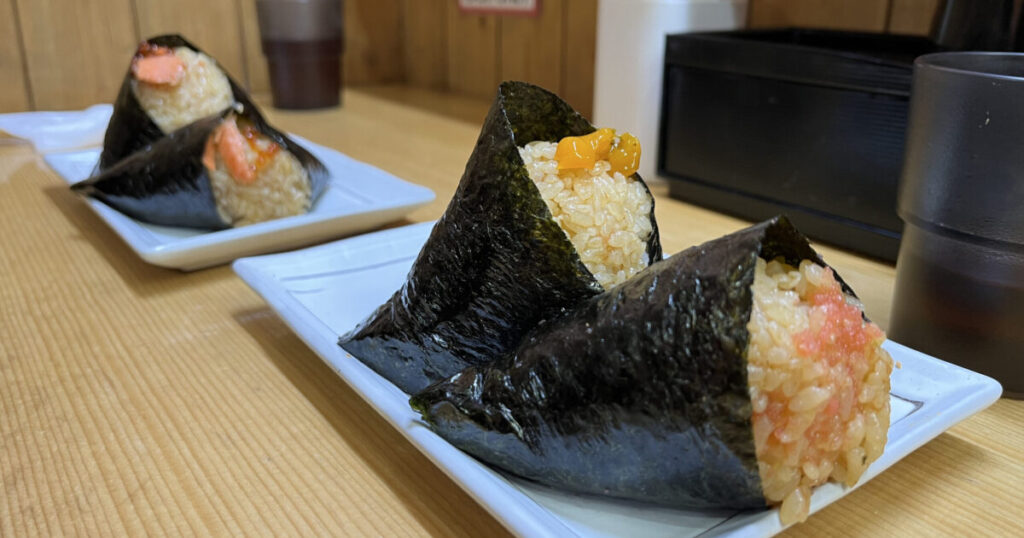
Not the convenience store kind — freshly made rice balls with proper fillings. The selection included classics like salmon (鮭, sake) and salmon roe (いくら, ikura), both of which feel especially fitting in Hokkaido given how good the local seafood is.
What makes a handmade onigiri different from a packaged one is the way it’s pressed — with just enough force to hold its shape, but light enough to preserve the air gaps between each grain of rice. That texture, soft and slightly loose rather than dense and compact, is something you can only really achieve by hand. Eaten slowly before the day got going, it was the kind of breakfast that doesn’t ask much of you.
The Sweet Shop Circuit
The morning was spent visiting Hokkaido confectionery shops for souvenirs — a necessary ritual on any Hokkaido trip.
We visited Rokkatei (六花亭 札幌本店) near Sapporo Station and Kitakaro (北菓楼 札幌本館) in a beautifully renovated historic building nearby. Both are Hokkaido institutions, and both deserve time rather than a rushed pass-through. The sweets here — dairy-based confections, white chocolate pieces, corn snacks, baked goods made with Hokkaido butter — are genuinely among the best in Japan. Deciding what to bring back for whom is its own pleasant challenge.
Most of what both shops sell is also available at New Chitose Airport, so if your schedule is tight you can leave the souvenir shopping until the end. That said, there are a few items that are only available at the flagship stores — and both shops have cafés worth sitting in if you have the time. If the morning allows it, visiting in person is the better experience.
The Hōheikan
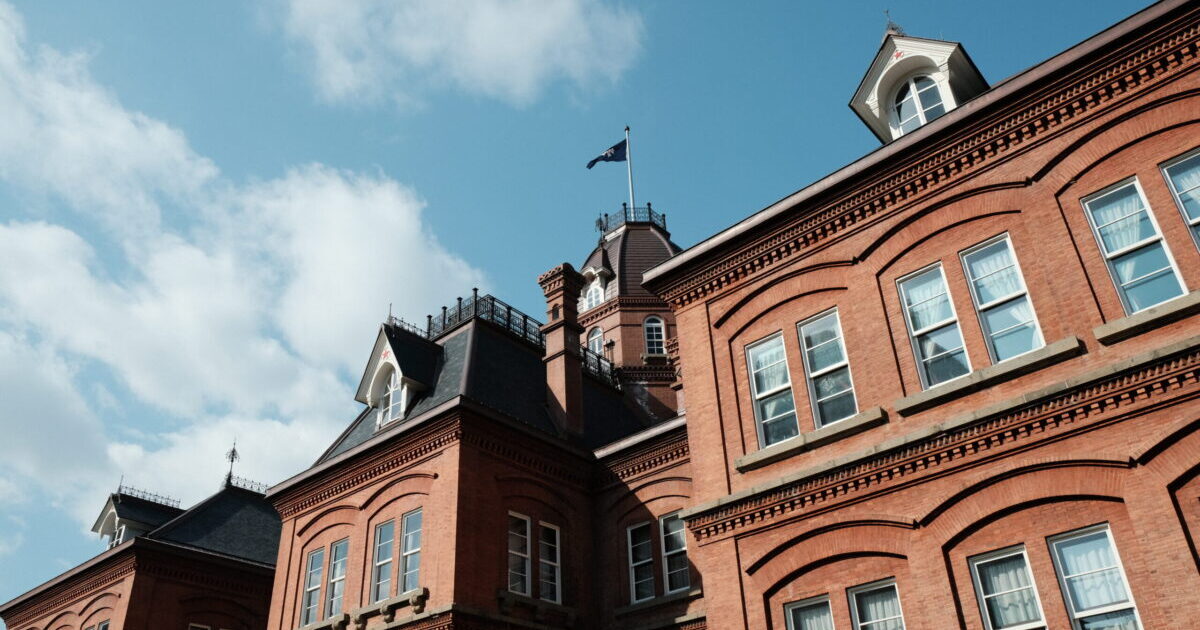
Before heading to the airport, one last stop in Sapporo: the Hōheikan (豊平館), located in Nakajima Park in the city centre.
Built in 1880 by the Hokkaido Development Commission and opened in 1881 as a Western-style hotel — with Emperor Meiji as its first guest — the Hōheikan is the oldest surviving wooden hotel building in Japan. It is designated as a National Important Cultural Property. Three emperors have stayed here: Meiji, Taishō, and Shōwa.
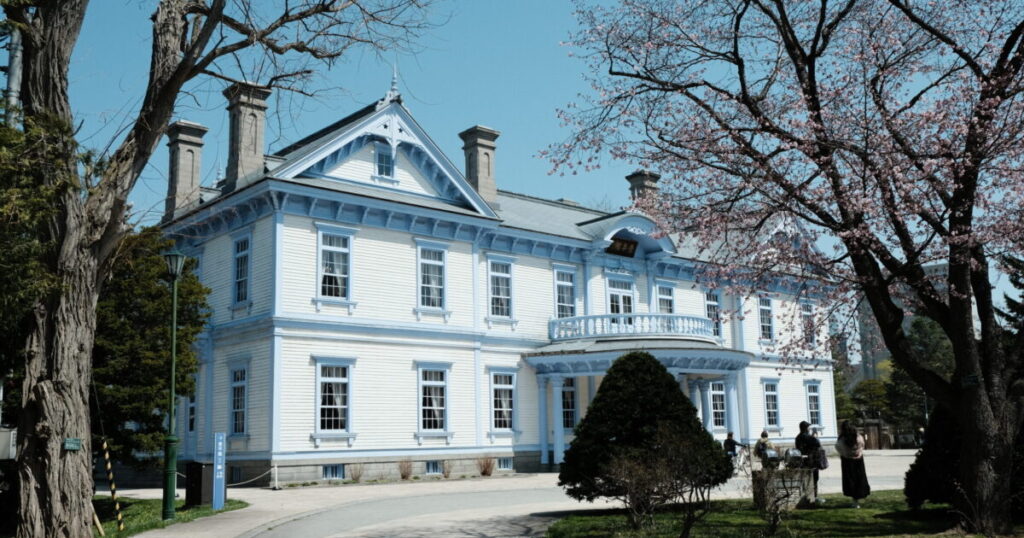
The building is painted white and ultramarine blue — a combination that required the ultramarine pigment to be specially imported from Europe at the time of its construction. Standing in front of it in the spring light, it looks almost incongruous: this elegant, confident Meiji-era Western structure sitting quietly in a public park, entirely at odds with its surroundings and entirely sure of itself for it. The interior has been restored to its original Meiji-era appearance and is open to visitors during daytime hours.
It’s an easy place to walk past without registering what it is. Worth stopping for.
Lunch: Soup Curry at Picante
Soup curry at Picante (ピカンティ) for a final Sapporo lunch — a Hokkaido specialty that deserves its own introduction for anyone who hasn’t tried it.
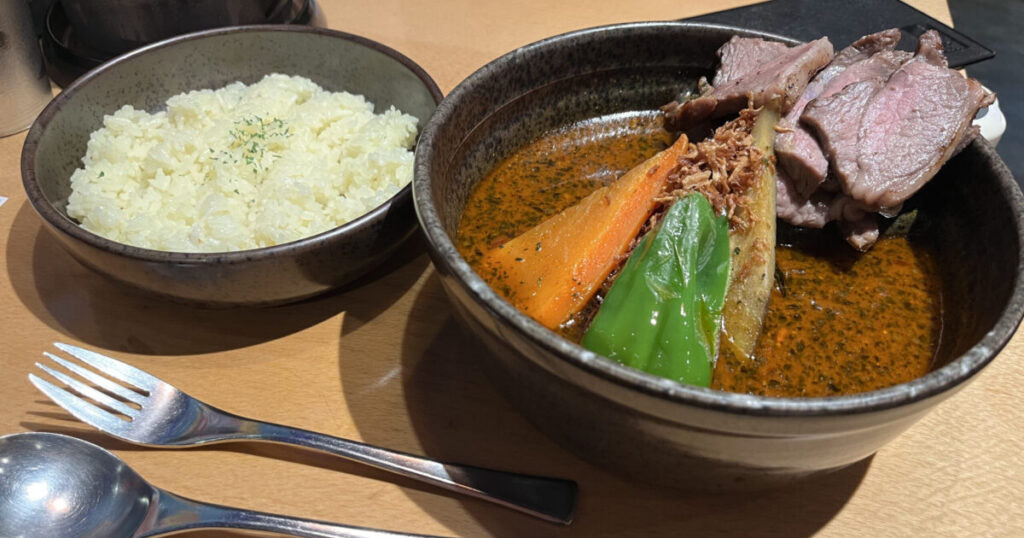
Unlike conventional curry, soup curry is a thin, intensely spiced broth rather than a thick sauce. Large pieces of slowly cooked vegetables — pumpkin, potato, carrot, aubergine — are served alongside meat, usually chicken or pork, in a bowl of aromatic broth that you eat with rice on the side. The spicing is complex and warming, the vegetables absorb the broth and become something more than themselves, and the whole thing sits somewhere between a curry and a soup without fully being either. It’s warming, satisfying, and distinctly Sapporo. It was the right last meal.
Returning the Car and Final Shopping
New Chitose Airport has better shopping than most airports have any right to. The Hokkaido food section makes the final hour before a flight a genuinely enjoyable experience rather than just a wait.
A few things worth doing:
- Sweet shop stroll
-
Most of Hokkaido’s renowned confectionery brands have a presence at the airport, which means you may not need to factor separate sweet shop visits into your city itinerary at all — leaving it until the airport is a perfectly reasonable strategy.
- Ice cream stroll
-
New Chitose Airport runs an annual soft cream and ice cream ranking called the Soft & Ice Cream Election, with four categories: Rich, Refreshing, Unique flavours, and Premium.
With over 30 options across the terminal, it’s worth checking the latest ranking before you go and working your way through a few. A very enjoyable way to kill time before a flight.https://www.hokkaido-airports.com/ja/new-chitose/spend/event/4630.html
- Ramen area
-
A dedicated ramen floor featuring well-known Hokkaido ramen shops, where you can try different regional styles side by side. Again, if ramen is on your list, you don’t necessarily need to plan a separate stop in the city — the airport covers it well as a final meal before heading home.
- Final seafood meal
-
If you haven’t had enough Hokkaido seafood yet (unlikely, but possible), the airport has proper seafood restaurants worth sitting down at before the flight home
One personal recommendation outside of the above: the freshly baked corn bread from Biei Senka (美瑛選果), available exclusively at New Chitose Airport.
That said, be prepared for a long queue — and the flavour itself is very simple, which some people may not find worth the wait. It’s the kind of thing you either appreciate immediately or wonder what the fuss is about. I’d still recommend trying it at least once, but go in with realistic expectations.
Honestly, New Chitose Airport deserves its own post. There’s enough to eat, browse, and explore that you could easily spend two or three hours here without noticing. That might be worth writing up separately at some point.
Final Thoughts
Three days in Hokkaido — horses in Hidaka, the Hill of the Buddha, jingisukan and parfait in Sapporo, a quiet morning with onigiri — felt like a genuine piece of the island rather than a surface-level pass through it.
Travelling the week before Golden Week rather than during it made the whole thing significantly more affordable and noticeably less crowded. If the timing works, it’s a simple decision. Hokkaido in late April doesn’t need the holiday crowds to feel special. It already is.
Links to all the places visited across the three days — restaurants, accommodation, and rental car — are compiled in the next post along with a full itinerary overview.