A week before Golden Week, Hokkaido costs significantly less than during the holiday itself — the timing was deliberate, and it paid off. We flew into New Chitose Airport (新千歳空港), picked up a rental car, and set off on a packed three-day itinerary.
Links to all restaurants, accommodation, and the rental car — plus details on the cost difference — are compiled in the summary post at the end of this series.
A Brief Introduction to Hokkaido
For those unfamiliar with Japan’s geography: Hokkaido (北海道) is Japan’s northernmost and second-largest island, separated from the main island of Honshu by the Tsugaru Strait. It accounts for roughly 20% of Japan’s total land area but only about 4% of its population — which goes a long way toward explaining why it feels so different from anywhere else in the country.
Where much of Japan is dense, compact, and fast-moving, Hokkaido is wide open. The landscape is defined by vast farmland, volcanic mountains, national parks, and coastline that stretches in every direction. The climate is harsher — cold winters with heavy snowfall, and short but beautiful summers — and the agricultural conditions are exceptional.
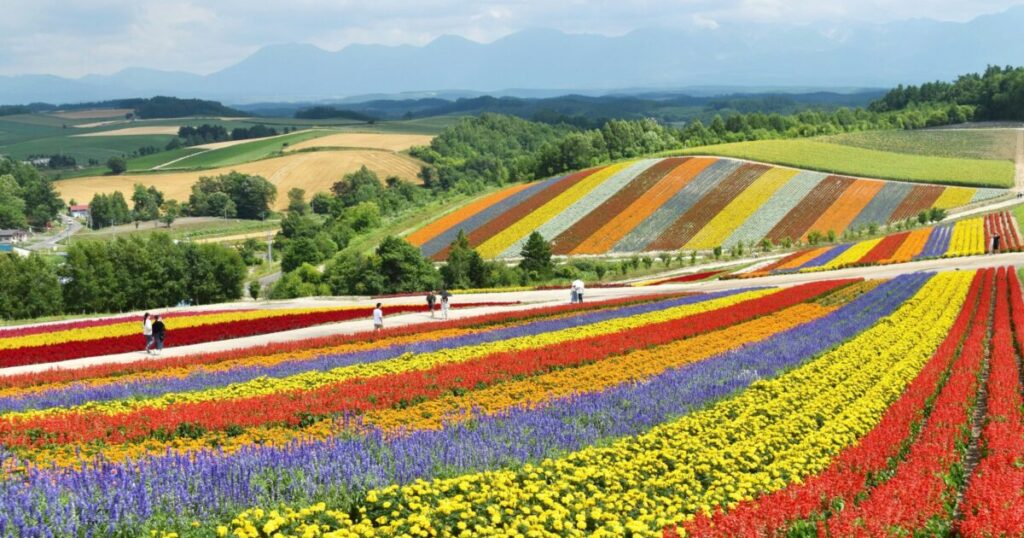
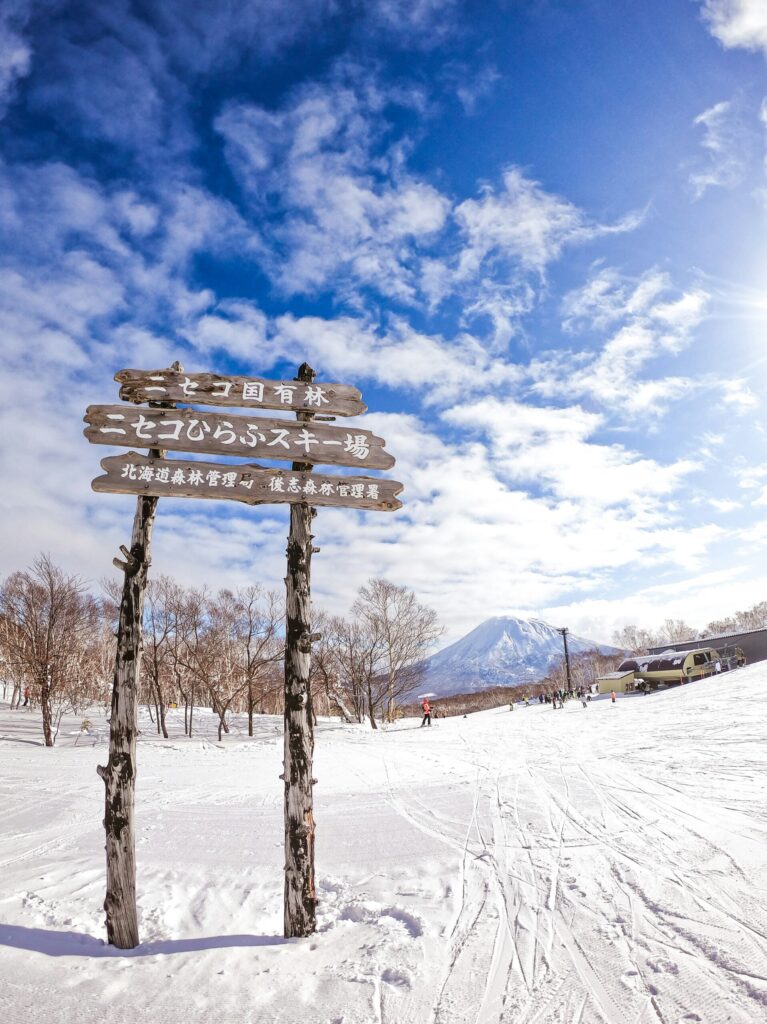
The quality of Hokkaido’s snow is also renowned, attracting skiers from across Japan and around the world to resorts such as Niseko and Furano. In summer, the landscape transforms entirely — lavender fields, sunflowers, and green rolling hills that look nothing like the Japan most visitors imagine. Hokkaido produces a disproportionate share of Japan’s dairy, wheat, seafood, and produce, which is why the food here has a reputation that draws people from across the country.
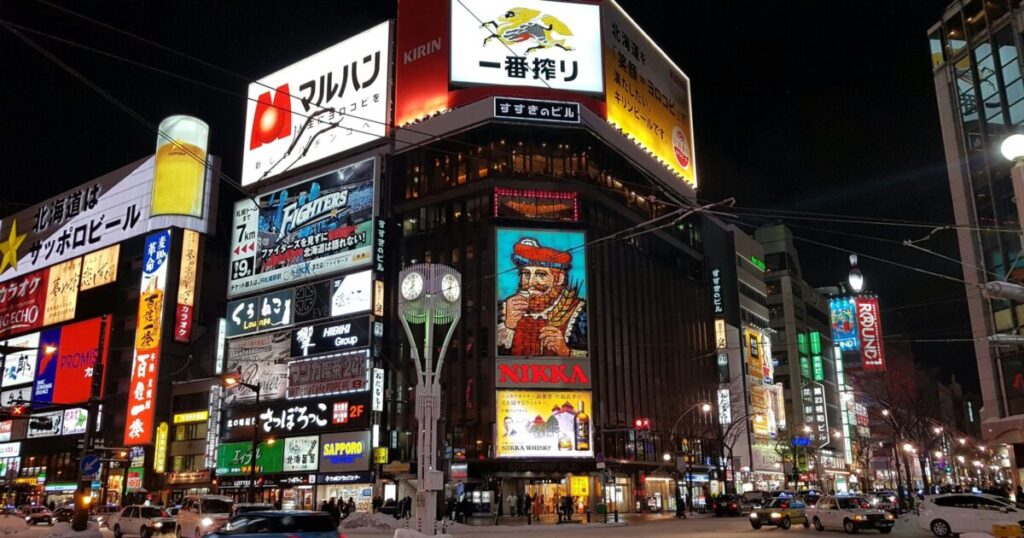
Sapporo (札幌) is the island’s largest city and the fifth-largest in Japan. New Chitose Airport, which serves the region, is about 40 minutes by train from central Sapporo and is the main gateway for domestic visitors. For food and nightlife, Susukino (すすきの) — Sapporo’s entertainment district — is the place to head after dark. Restaurants, bars, and late-night spots are concentrated here, and it’s widely considered one of the liveliest nightlife districts in Japan outside of Tokyo and Osaka.
One thing worth knowing before planning any Hokkaido trip: the island is enormous. Distances between destinations are far greater than most visitors expect, and travel time needs to be factored into any itinerary from the start.
First Stop: Sushi
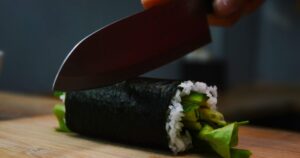
The first thing to do after landing in Hokkaido is eat. We stayed in Chitose where we picked up the rental car and headed straight to Hokuhokutei, Chitose branc (北々亭 千歳店) for sushi.
Hokuhokutei is a kaiten-zushi (回転寿司) — a conveyor belt sushi restaurant — that punches well above what you’d expect for the price. Good quality Hokkaido seafood at a very reasonable cost. Worth noting that many kaiten-zushi restaurants across Japan have recently moved away from the traditional conveyor belt, replacing it with tablet ordering systems instead — but the casual, accessible spirit of the format remains the same.
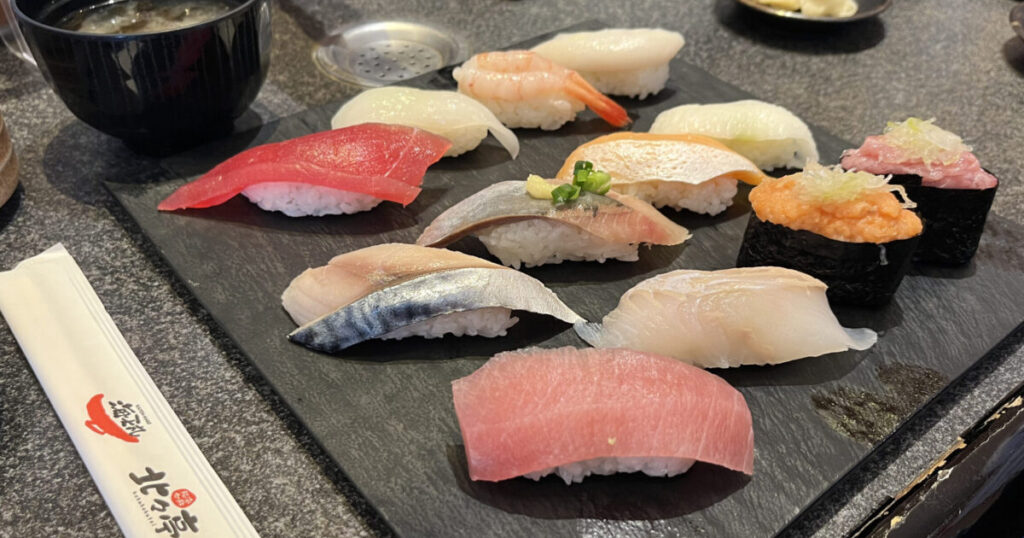
Hokkaido seafood is a different experience from what you get further south. The sea urchin, salmon, scallops, and crab arrive fresher and more immediate — a direct reflection of how close the fishing grounds are. It’s the kind of meal that recalibrates your expectations and makes you wonder why you were ever satisfied with anything else.
We left the sushi counter thoroughly satisfied and got on the road.
The Drive South: Hidaka
The drive south toward the Hidaka (日高) region is one of those stretches of road that reminds you how different Hokkaido is from the rest of Japan. The landscape opens up. The sky feels bigger. The mountains sit in the distance and the road just keeps going.
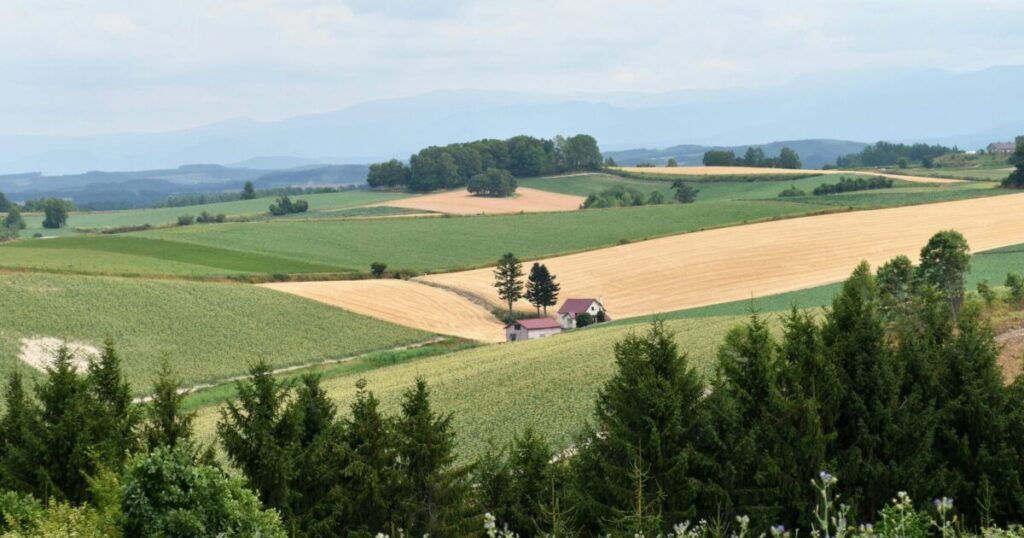
Hidaka is Japan’s thoroughbred heartland — nearly 700 horse ranches dot the region, producing a lion’s share of the country’s racehorses. Driving through, stables appear constantly along the roadside, and you find yourself slowing down involuntarily to watch horses grazing in the fields. It’s an unexpectedly beautiful part of the island, and one that most visitors to Hokkaido never see.
Yogibo Versailles Resort Farm
Our destination for the night was Yogibo Versailles Resort Farm (ヨギボーベルサイユリゾートファーム) in Hidaka-cho — a farm established to give retired racehorses a peaceful second life after their competitive careers end.
The farm gained wider public attention through a partnership with Yogibo, the bean bag furniture company, whose viral commercials featuring the horses lounging on Yogibo sofas became a huge social media hit. Beyond that, it has quietly built a reputation as a genuinely special place to stay and experience horses up close.
Accommodation comes in two options: standard rooms, and trailer houses with direct access to the pasture right outside. We stayed in the trailer house — and what sets it apart is the proximity to the horses.
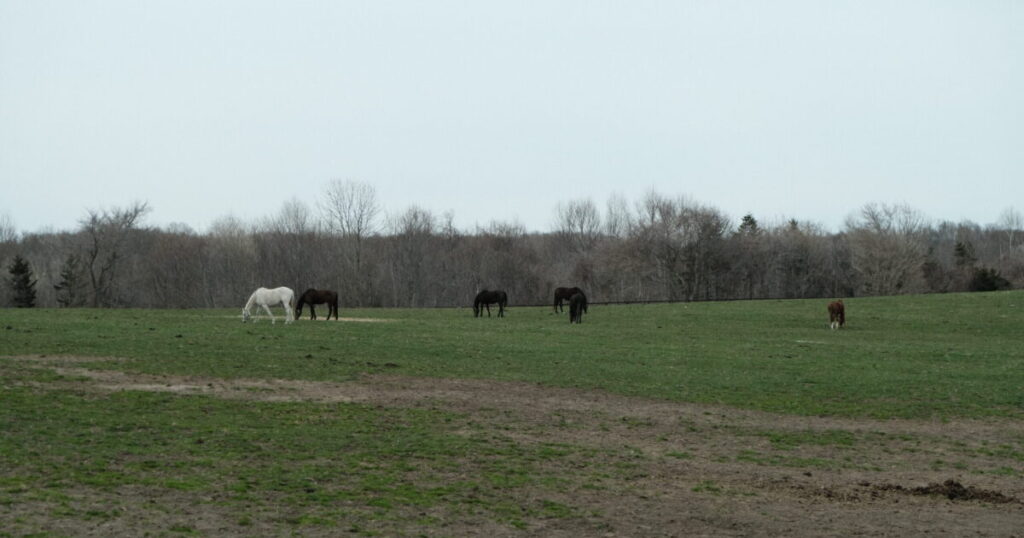
Outside of working hours, guests can walk freely around the stables, which means you get to see a side of the horses that most people never do — their quiet, unhurried nightlife. Horses moving slowly in the dark, the sounds of the stable at rest, the smell of hay and grass. It’s an unexpectedly atmospheric experience.
Dinner: Biratori Wagyu at Kurobeko
After checking in, we headed to Kurobeko (くろべこ) for dinner — about a ten-minute drive from the farm. The reason to go: Biratori Wagyu.
Biratori Wagyu is a regional beef raised in Biratori-cho, a town in the Hidaka region known for its rich agricultural land and its close relationship with the Ainu people, the indigenous population of Hokkaido. The cattle are raised slowly in the clean Hokkaido environment, and the beef is known for its fine marbling, deep flavour, and a tenderness that reflects that unhurried upbringing. It’s not as nationally famous as Kobe or Matsusaka beef, but for those who know it, it’s something worth going out of your way for.
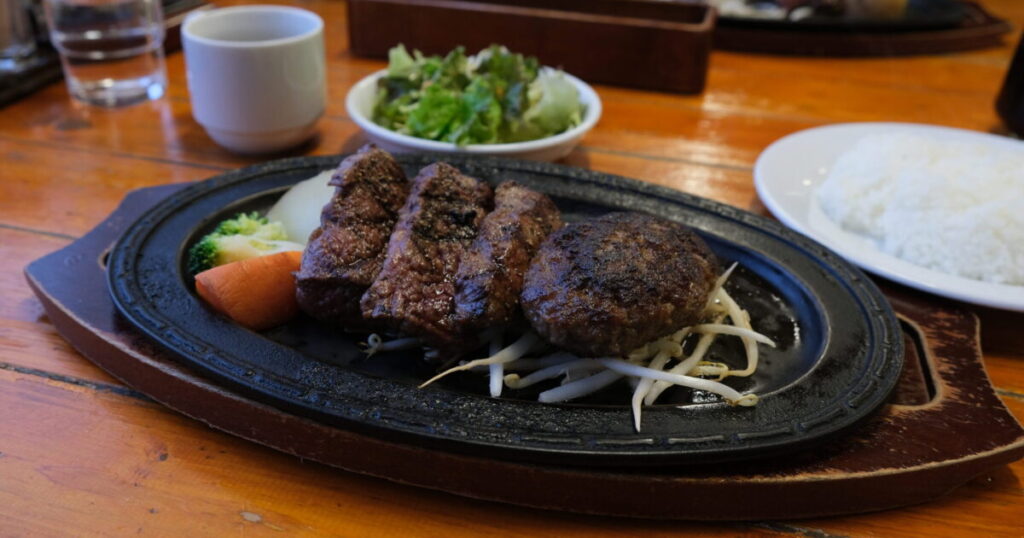
Eating it here, close to where it’s raised, felt like the right way to do it. We came back to the farm as the light faded, walked around the stables, and called it a day.
Day 2: Morning with the horses, ramen in Chitose, the Hill of the Buddha, and jingisukan in Sapporo.