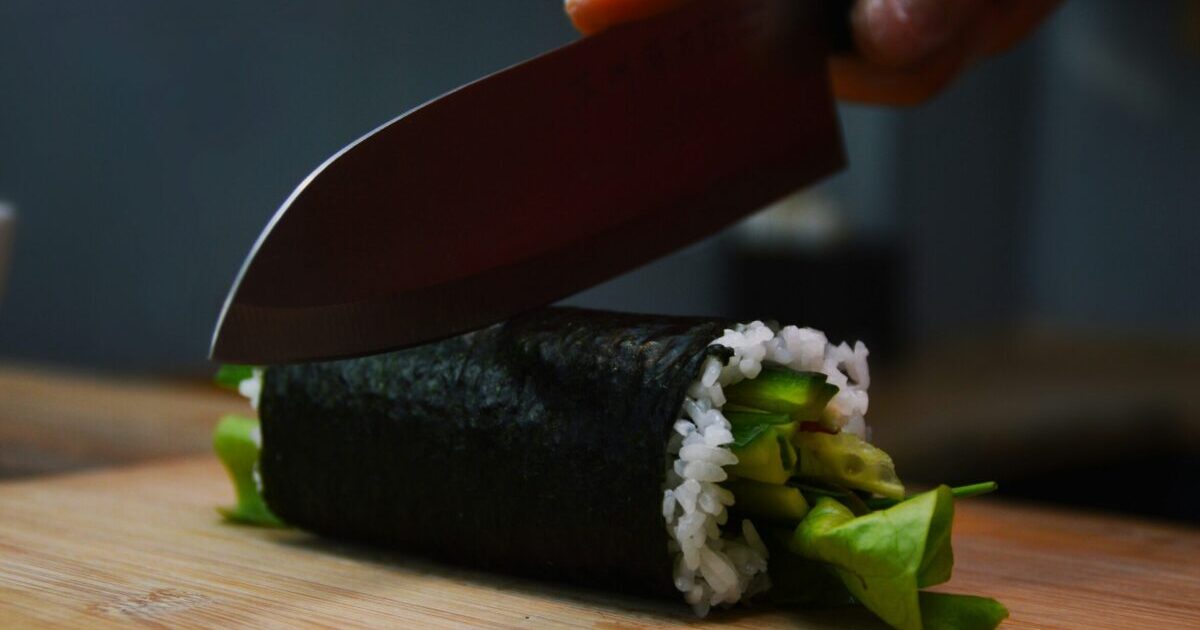
If there’s one thing in my kitchen I feel genuinely attached to, it’s my knives.
Not in an obsessive, collector kind of way. I’m not someone who spends hours researching steel grades or measuring bevel angles. I’m just someone who cooks regularly and noticed, over time, that the right knife makes everything feel easier and more satisfying — the way a good pen makes writing feel different, even if you can’t quite explain why.
Here’s what I use, what I love, and a little background on why Japanese knives are worth understanding even if you’ve never given them much thought.
A Little Background: Seki City and the Knife Tradition
Seki City (関市) in Gifu Prefecture has been Japan’s knife-making capital for centuries. Its history in blade-making goes back to the Kamakura (鎌倉) period, when good clay, iron sand, water, and resources for high-quality charcoal were discovered there, making it ideal for forging swords for the samurai (侍). Over time, that tradition evolved from sword-making into kitchen knives, and Seki is now recognized globally as one of the great knife-producing cities in the world, often compared to Solingen in Germany.

Two brands that carry that tradition today are Seki Magoroku and Nagomi. Those are the two brands in my kitchen.
Seki Magoroku’s name carries deep historical weight. It’s named after Magoroku Kanemoto, a legendary swordsmith from the Sengoku (戦国) period, the era of warring states in feudal Japan. His blades were praised for their cutting ability, durability, and suitability for battle. Notable warlords of the era, including Oda Nobunaga, are said to have owned his swords. The guiding principle passed down through generations was simple: a blade that won’t break, won’t bend, and cuts well. Kai Corporation, which produces the brand today, was founded in 1908 and has carried that tradition forward ever since.
Nagomi is a newer name, but it comes from the same city and the same craft lineage. I didn’t arrive at either brand through deep research — I tried them, liked how they felt, and never looked back.
The Three Knives I Use
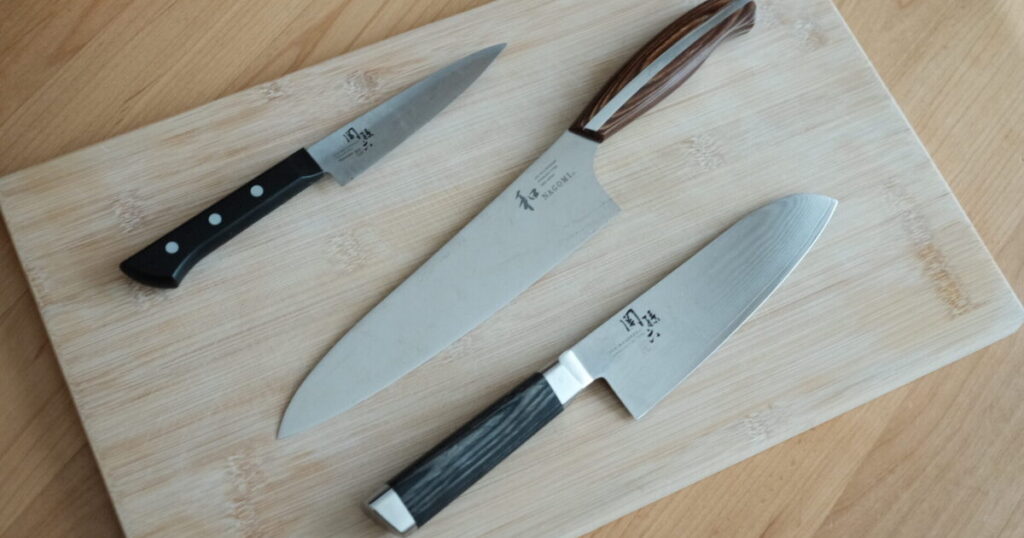
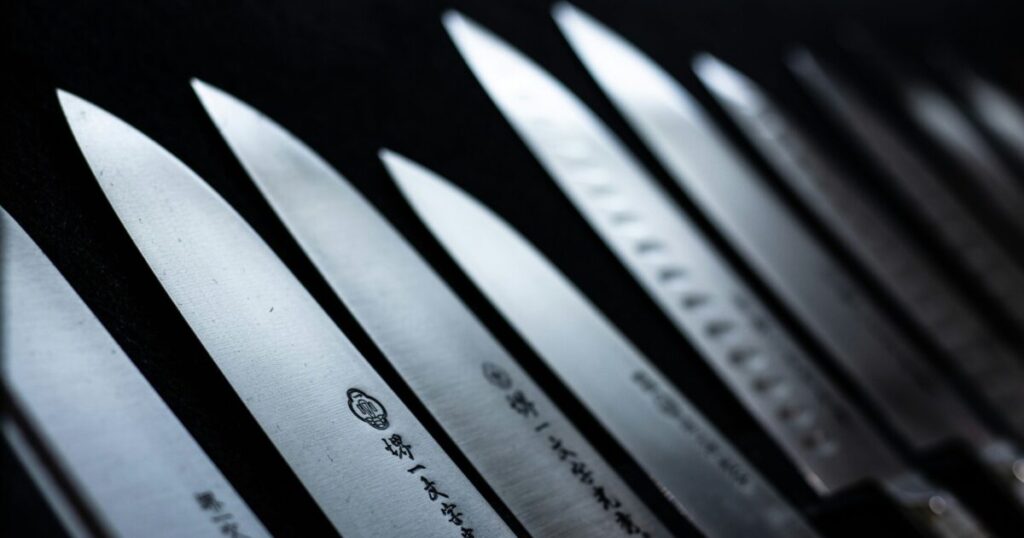
Santoku (三徳包丁) — The One I Reach for Most (Bottom in the photo above.)
The santoku is probably the most common knife in Japanese home kitchens, and it’s the one I use most. The name literally means “three virtues” (三徳) — it handles meat, fish, and vegetables equally well. It’s shorter and slightly wider than a gyuto, with a flatter blade profile that suits a chopping motion more than a rocking one.
I reach for it almost every single day — prepping vegetables for nabe (鍋), slicing tofu, cutting meat into portions. It’s the knife that quietly does the most work without ever demanding any attention. If you’re only going to own one Japanese knife, this is the one. Mine is from Seki Magoroku, and it’s been in daily use long enough that I’ve stopped thinking about it as a tool — it just feels like an extension of my hand in the kitchen. Priced at around ¥16,000, it sits comfortably in that sweet spot of quality without excess.
Gyuto (牛刀) — For When I Need More Length (Middle in the photo above.)
The gyuto is the Japanese equivalent of a Western chef’s knife — a longer, all-purpose blade suited to slicing larger cuts of meat or working through bigger volumes of vegetables. I don’t use it as often as my santoku, but there are times when that extra length makes a real difference, and I’m always glad to have it.
This one is from Nagomi, also based in Seki City. The feel is slightly different from my Seki Magoroku knives — a little more refined in the handle, with a balance that suits longer, drawing cuts particularly well. Both brands share the same city and the same blade-making heritage, but each has its own character. Having knives from two different Seki makers side by side is a small reminder of how much craft still lives in that one city. At ¥15,000, it’s a considered purchase — but one that earns its place every time you use it.
Petty (ペティナイフ) — Small but Essential (Top in the photo above.)
The petty is a small utility knife, somewhere between a paring knife and a short chef’s knife. I use it for anything that needs precision — peeling fruit, trimming vegetables, portioning small ingredients. It’s the knife you reach for when even the santoku feels like too much.
Once you have a petty, you wonder how you managed without one. Mine is from Seki Magoroku, and like the santoku, it gets used far more often than its modest size would suggest. At ¥2,000 it’s also the most affordable of the three — a very easy first step into Japanese knives if you’re not ready to commit to something larger.
Why Japanese Knives Specifically?
Japanese knives tend to be thinner and harder than their Western counterparts, which means they can be sharpened to a finer, more acute angle. That translates to a sharper edge and cleaner cuts — but it also means they’re slightly more brittle and need a bit more care.
For everyday home cooking, the difference is noticeable from the very first use. Vegetables cut more cleanly. Fish slices more precisely. Even something as simple as cutting an onion becomes faster and less messy when the knife is doing the work properly.
Both Seki Magoroku and Nagomi sit in a sweet spot I appreciate: genuinely well-made knives that carry real craftsmanship behind them, at a price that doesn’t require agonizing over the purchase. In Japan, good kitchen tools don’t have to be luxury items. That accessibility is something I think gets lost when Japanese knives are marketed internationally at premium prices.
A Final Thought
A knife is probably the most used tool in any kitchen, and yet it’s one people rarely think about until they use a bad one — or a really good one.
Both Seki Magoroku and Nagomi sit in a price range that I’d describe as the sweet spot — not the cheapest option on the shelf, but far from luxury territory either. They’re the kind of purchase you make once, use every single day, and never regret. A good knife doesn’t just make cooking easier — it makes it more enjoyable, and that small improvement to your daily life is absolutely worth the investment.
I’m not suggesting you need to build a complete set from a single brand. My own collection grew gradually and ended up spanning two makers, both from the same city, each with its own personality. That feels right to me. Start with one good santoku, use it properly, take care of it, and notice the difference. That’s really all it takes to understand why people here take their kitchen knives seriously.
Next time, I’ll be sharing more about Japanese products I use — the everyday finds that make daily life a little more enjoyable. Stay tuned.