If you’ve ever looked up flights to Japan in late April and wondered why everything is suddenly expensive and fully booked, Golden Week is your answer.
It’s the longest holiday period in the Japanese calendar outside of New Year, and right now, as I write this, we’re right in the middle of it. The city feels different. The trains are quieter in the mornings. The motorways are packed. And somewhere, a lot of people are making memories.
Here’s what Golden Week actually is, what it means to people who live here, and what it looks and feels like from the inside.
What Is Golden Week?
Golden Week (ゴールデンウィーク, Gōruden Wīku) is a cluster of four national holidays that fall within a single week at the end of April and the beginning of May. The holidays span from April 29 to May 5, and because they’re so closely packed together, most people take the entire week off — making it one of the busiest travel periods of the year, alongside New Year and Obon (お盆). Obon is a separate summer holiday period with its own rich traditions — I’ll write about it properly when the season arrives.
The name itself has an unexpected origin. In 1951, the film Jiyū Gakkō recorded higher ticket sales during this holiday-filled week than at any other time of the year. This prompted the managing director of Daiei Film Co. to dub the week “Golden Week,” borrowing from Japanese radio lingo where “golden time” denoted the highest-rated listening period. The name stuck.
The Four Holidays
Each day within Golden Week has its own meaning and history.
- April 29 — Showa Day (昭和の日, Shōwa no Hi)
-
April 29 is the birthday of former Emperor Shōwa, who died in 1989. The day invites reflection on the Shōwa era — a period that encompassed war, defeat, and Japan’s remarkable postwar recovery. It’s a quieter, more contemplative start to the week.
- May 3 — Constitution Memorial Day (憲法記念日, Kenpō Kinenbi)
-
On this day in 1947, Japan’s new postwar constitution was put into effect. It’s the only day of the year when the National Diet Building is open to the public — a small but meaningful gesture toward civic transparency.
- May 4 — Greenery Day (みどりの日, Midori no Hi)
-
A day dedicated to nature and the environment. The day is associated with former Emperor Shōwa, who was known for his love of plants and nature. Parks and botanical gardens tend to be especially busy on this day.
- May 5 — Children’s Day (こどもの日, Kodomo no Hi)
-
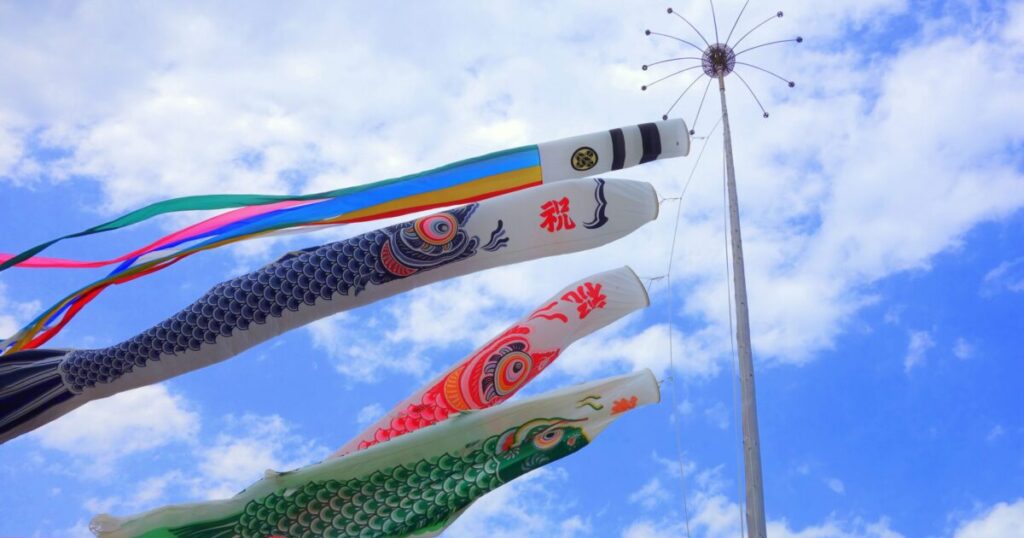
The most visually striking day of the week. Families pray for the health and future success of their sons by hanging up koinobori (鯉のぼり) — carp streamers — and displaying samurai dolls symbolising strength and success. The streets fill with colourful fish-shaped flags catching the wind, and it’s one of the most distinctly Japanese sights of the entire year.
What Golden Week Feels Like From the Inside
For people who live here, Golden Week is many things at once.
It’s the one time of year when Japan’s notoriously hardworking culture collectively exhales. Most companies shut down entirely, and the social permission to simply rest — without guilt — is something that’s felt rather than stated. Japan has 16 national holidays spread across the year, but Golden Week is unique in the way it concentrates that rest into one uninterrupted stretch.
It’s also deeply seasonal. Golden Week arrives at exactly the right moment in the Japanese year — spring is at its warmest, the cherry blossoms have passed their peak but the greenery is fresh, and the heat of summer hasn’t yet arrived. Being outside feels genuinely good. That timing is part of what makes the week feel special rather than just administrative.
And it’s crowded. Extraordinarily so. Trains, airports, and sightseeing spots get very crowded during Golden Week, and accommodation in tourist areas can get booked out well in advance. The motorways out of major cities on the first day look like parking lots. Every popular destination in Japan — Kyoto, Hakone, Okinawa, the national parks — fills up simultaneously. It’s a reminder of just how many people are all having the same idea at the same time.
What People Actually Do
Domestic travel is the defining activity of Golden Week. Families return to hometowns. Couples escape to onsen (温泉) resorts. Young people head to festivals or the coast. The shinkansen (新幹線) fills up weeks in advance.
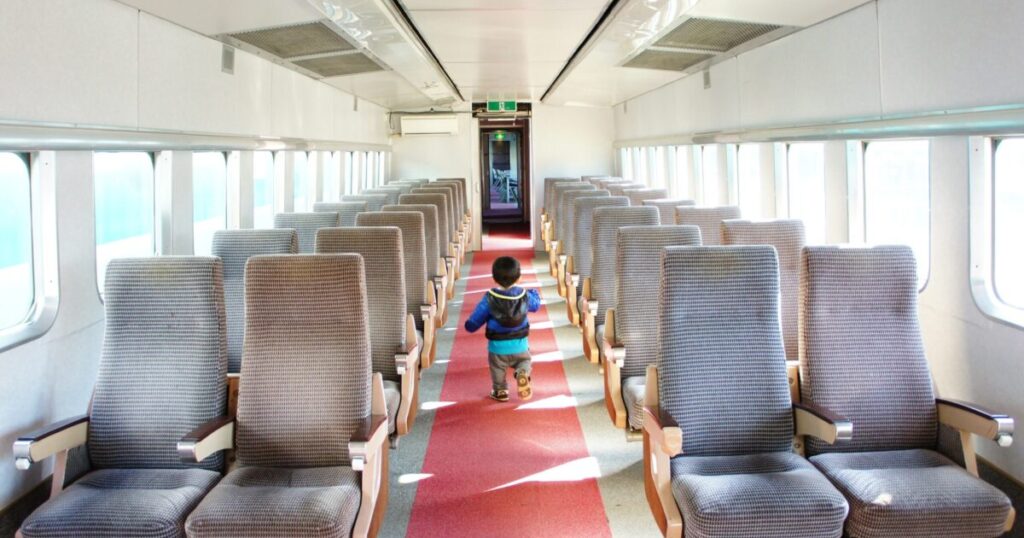
For those who stay home — and plenty do — Golden Week is a chance to do the things that daily life doesn’t make time for. A long overdue visit to a museum. Cooking something elaborate. Catching up with friends over a long dinner. Walking around a neighbourhood you’ve been meaning to explore for months.
There’s also a particular Golden Week ritual that many Japanese people share without it being officially named: spending the first day or two feeling slightly lost. When you’re used to the rhythm of work and obligation, a sudden expanse of free time requires a moment to adjust.
Golden Week in 2026
Golden Week 2026 runs from Wednesday, April 29 to Wednesday, May 6. In 2026, Constitution Memorial Day (May 3) falls on a Sunday, which means its substitute holiday (振替休日, furikae kyūjitsu) is observed on Wednesday, May 6 — the next available working day. This is why Golden Week extends to May 6 this year, giving those who can take additional days around April 30 and May 1 the possibility of up to twelve consecutive days off — making it an unusually long Golden Week by recent standards.

The weather in late April and early May tends to be mild and clear across most of Japan, which makes it ideal for travel if you can handle the crowds.
A Note for International Visitors
If you’re planning to visit Japan during Golden Week, a few things worth knowing: book everything as early as possible, expect higher prices for transport and accommodation, and consider less obvious destinations over the famous ones — the famous ones will be at maximum capacity. The early morning hours at any popular site are significantly calmer than midday.
That said, the energy of Golden Week — the sense of an entire country simultaneously on holiday — is something you can only really experience by being here for it. The koinobori flying above the streets, the families out together, the feeling of collective permission to slow down. It’s worth experiencing at least once.
Golden Week 2026 runs until May 6. If you’re in Japan right now — enjoy it.