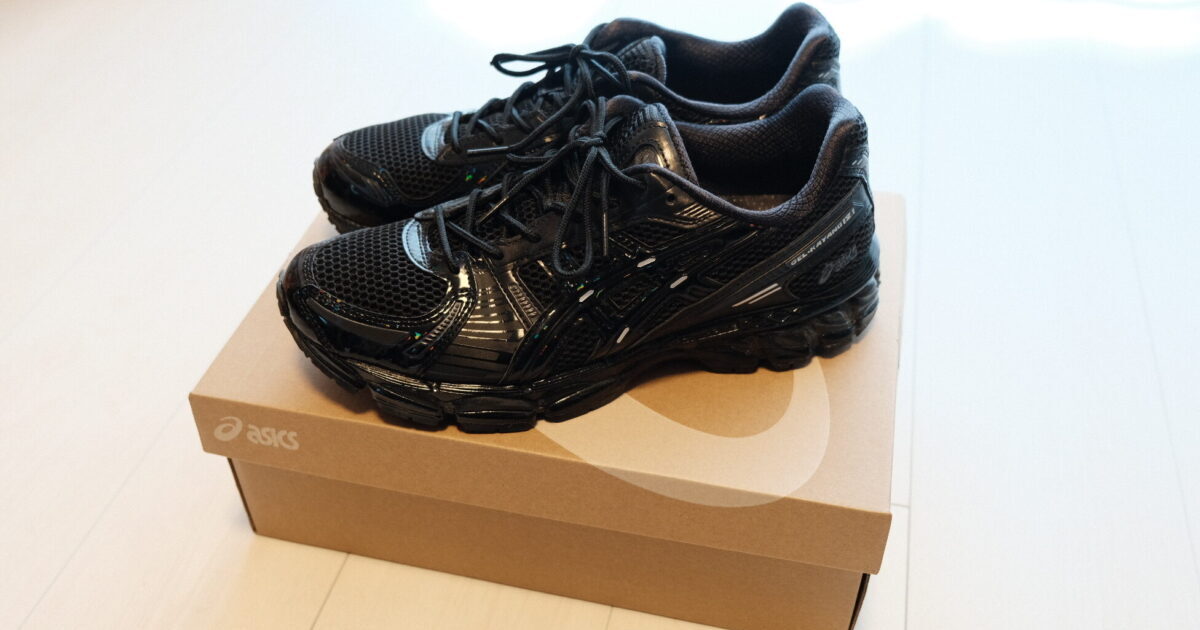
I’ve been wearing these almost every day since I got them, and I still find myself stopping to look at them when the light hits at the right angle. That’s not something I say about many sneakers.
They’re the GEL-Kayano 12.1 “Raden,” a collaboration between atmos and ASICS — two of Japan’s most respected names in sneaker culture. On the surface, they look like a blacked-out runner. Look closer, and they’re something else entirely.
Two Japanese Institutions
Before getting into the sneaker itself, it’s worth understanding who made it.
ASICS (アシックス) was founded in 1949 in Kobe by Kihachiro Onitsuka, originally under the name Onitsuka Tiger (オニツカタイガー). The name ASICS itself is an acronym derived from the Latin phrase Anima Sana In Corpore Sano — a sound mind in a sound body — a philosophy that has guided the brand’s approach to athletic footwear ever since. The GEL-Kayano line, first introduced in 1993, became one of the brand’s most celebrated running silhouettes, known for its exceptional cushioning and long-distance comfort.
atmos (アトモス) is a Tokyo-based sneaker boutique founded in 2000 in Harajuku (原宿). Over the past two decades it has grown into one of the most respected collaborative forces in global sneaker culture, consistently rooting its designs in Japanese heritage and local aesthetics. The atmos × ASICS partnership is one of the more established ongoing collaborations in Japanese sneakers, and the RADEN release is their first together in 2026.
What Is Raden?
Raden (螺鈿) is a traditional Japanese decorative craft believed to have arrived in Japan around the 8th century via the Silk Road. The technique involves inlaying thin, iridescent slices of mother-of-pearl shell into lacquerware or woodwork — furniture, boxes, musical instruments, armour. The natural colours of the shell shift and shimmer depending on the angle of light, creating a surface that never looks quite the same twice.
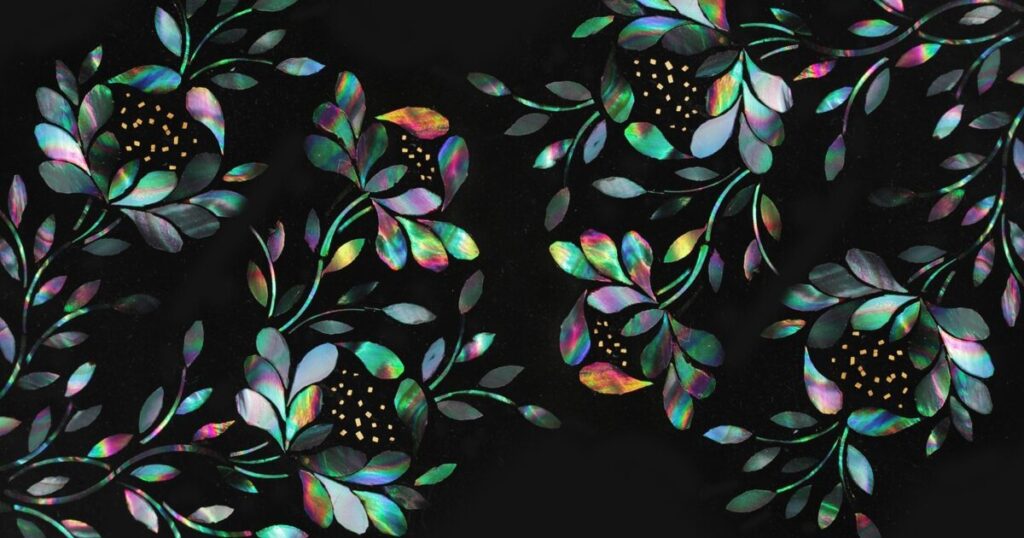
It has been designated a National Treasure of Japan, and today only a small number of artisans continue to practise it at a high level. To bring authenticity to this collaboration, atmos partnered with Takuya Nomura of Sagaraden, a Kyoto-based craftsman celebrated for giving traditional Raden a modern twist. A special exhibition of Nomura’s work also opened at the renovated atmos Ginza store around the time of the release — the craft and the sneaker presented side by side.
The Sneaker
The GEL-Kayano 12.1 is itself a hybrid silhouette — originally co-developed with New York-based retailer KITH, combining the upper of the GEL-Kayano 12 with the sole unit of the GEL-Nimbus 17. First introduced in 2024 through KITH founder Ronnie Fieg, the silhouette quickly became a canvas for collaborations, and the atmos RADEN release is one of the most considered takes on it yet.
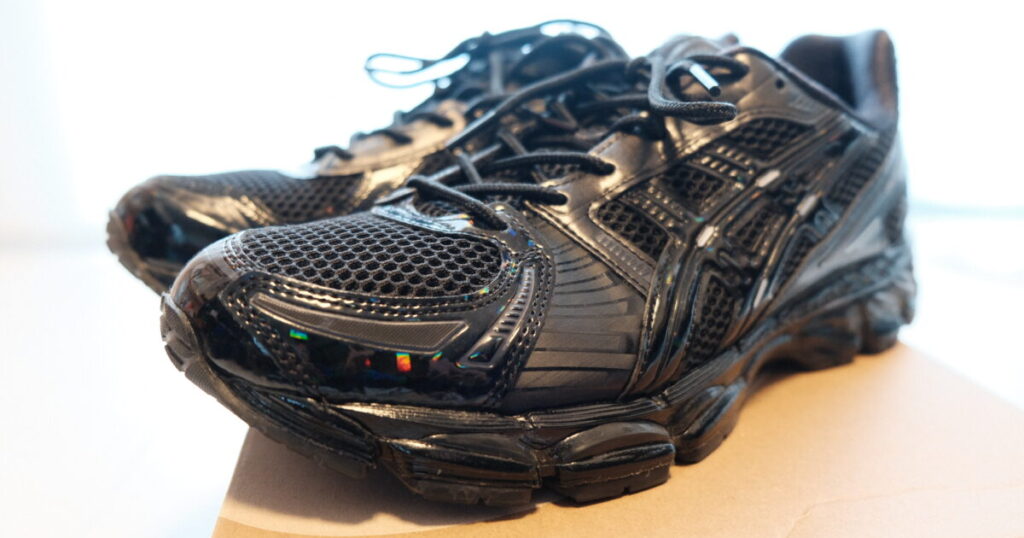
The RADEN collaboration takes that base and does something quiet and striking with it. The black-on-black colorway looks plain from a distance, but up close, the panelling adds a twinkling play on Raden — the centuries-old artistic practice of inlaying mother-of-pearl’s iridescent colour shifting inside of wood or lacquer. The leather overlays around the quarter and toe catch the light and shift through blues, greens, and purples depending on your angle and the lighting around you. Indoors, it’s subtle. In sunlight, it genuinely stops people.
The structural base was originally inspired by European gothic armour — an unusual reference that somehow works completely, giving the silhouette a solidity that grounds all the iridescent shimmer above it. A colourful inner sole adds one more layer of craft to the interior that you notice every time you put them on.
Retail price was ¥28,600 — a considered purchase, but one that feels entirely justified given what you’re getting.
What It’s Like to Wear Them
Comfort was always the GEL-Kayano’s strong suit, and the 12.1 doesn’t disappoint. The GEL-Nimbus 17 sole unit underfoot means there’s genuine cushioning at work — these aren’t fashion sneakers pretending to be runners. They feel broken in almost immediately, and after a full day of wear there’s no discomfort to report.
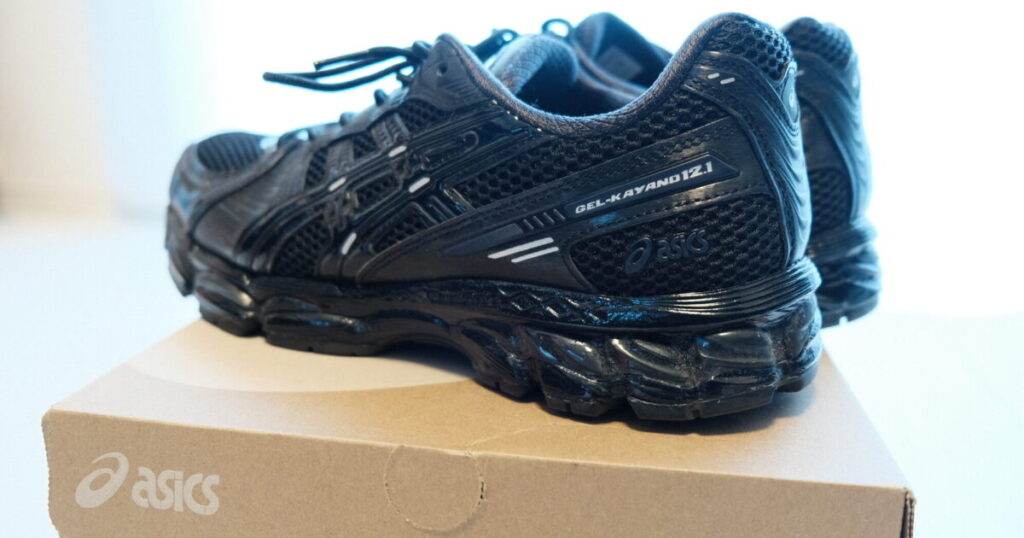
I wear them casually — with denim, with wide trousers, with whatever the day calls for. The blacked-out base means they pair with almost anything, and the iridescent shimmer adds enough visual interest that they never look boring. What I appreciate most is the restraint of the design: you have to be close, and in the right light, to fully appreciate what’s going on. That kind of quiet confidence is rare in sneaker design.
Why This Collaboration Works
The best sneaker collaborations feel inevitable in retrospect — like the two parties were always going to make this together. atmos and ASICS rooting a sneaker in Raden craft makes complete sense: both brands care deeply about Japanese heritage, both operate at a level where craft and concept matter as much as aesthetics, and Raden is exactly the kind of subject that rewards careful translation into a new medium.
It also helps that the execution is honest. atmos didn’t just slap an iridescent finish on a sneaker and call it Raden. They worked with an actual Kyoto craftsman, held a real exhibition, and let the material do its work with subtlety rather than spectacle. That’s the difference between a theme and a collaboration.
Final Thoughts
If you’re interested in Japanese sneaker culture, craft history, or simply a shoe that rewards close attention, the GEL-Kayano 12.1 “Raden” is worth knowing about. It’s one of those releases that feels genuinely rooted in something — not just a colourway, but an idea.
I still look down at them when the light hits right. That’s usually a good sign.