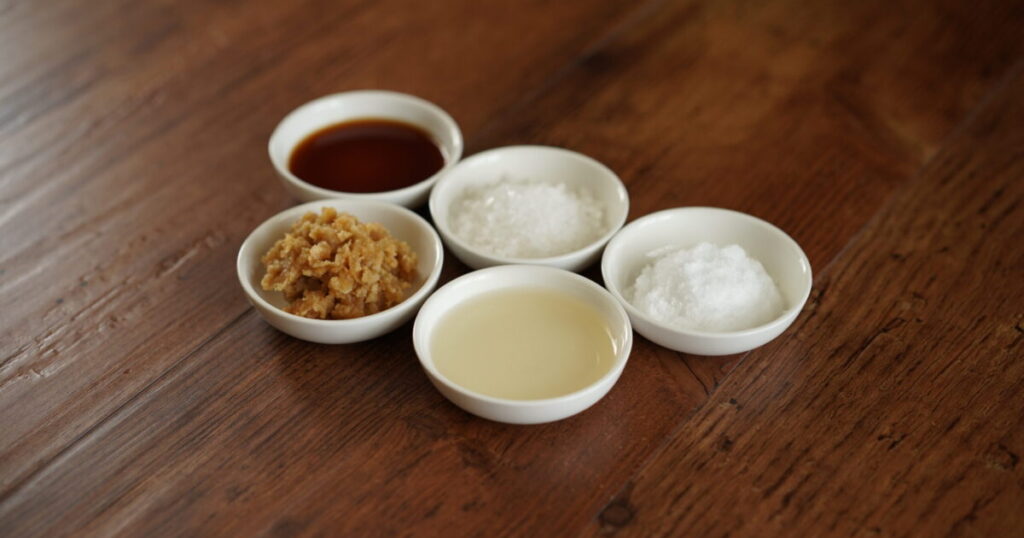
If you’ve ever watched a Japanese person cook and wondered why the food tastes the way it does — why even simple everyday dishes have a particular depth and balance — part of the answer lies in five basic seasonings that most Japanese home cooks know by heart.
They’re referred to collectively as さしすせそ (sa-shi-su-se-so), a mnemonic that uses the Japanese syllabary to name them in the order they’re typically added during cooking. I didn’t learn this from a cookbook or a cooking class. It was simply something everyone around me knew growing up.
And yet when I think about it now, there’s something worth explaining here. These five seasonings form the quiet backbone of Japanese home cooking, and understanding them goes a long way toward understanding why Japanese food tastes the way it does.
The Five Seasonings, Explained
さ(Sa) — 砂糖 (Satō / Sugar)

Sugar is added first because it takes the longest to penetrate ingredients. In Japanese cooking, sugar isn’t used for sweetness in the way you might expect — it’s more about balance, rounding out flavour and adding a gentle depth to simmered dishes.
You’ll find it in nimono (煮物), the simmered vegetable and protein dishes that appear regularly on Japanese dinner tables. A small amount of sugar added early in the cooking process helps the other seasonings that follow penetrate the ingredients more effectively. It’s a supporting role, quietly doing its work in the background.
し(Shi) — 塩 (Shio / Salt)
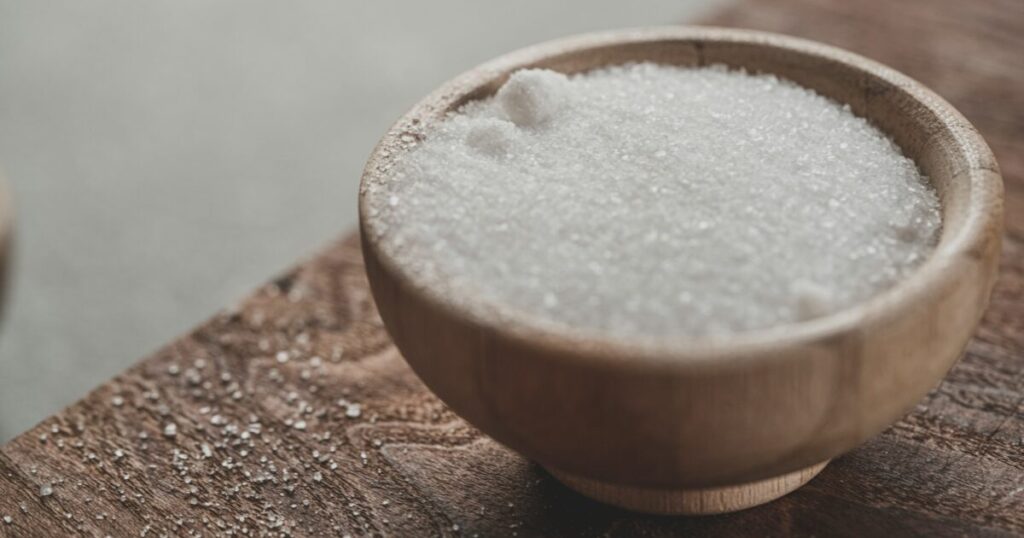
Salt comes second, drawing out moisture from ingredients and beginning to concentrate their natural flavour. In Japanese cooking, salt tends to be used with more restraint than in many Western cuisines — the goal is to enhance what’s already there rather than to season aggressively.
Shio (塩) also appears as a seasoning style in its own right. Shio ramen, shio yakitori — in these cases the salt is front and centre, letting the natural flavour of the broth or the meat speak for itself without the colour or weight of soy sauce.
す(Su) — 酢 (Su / Vinegar)
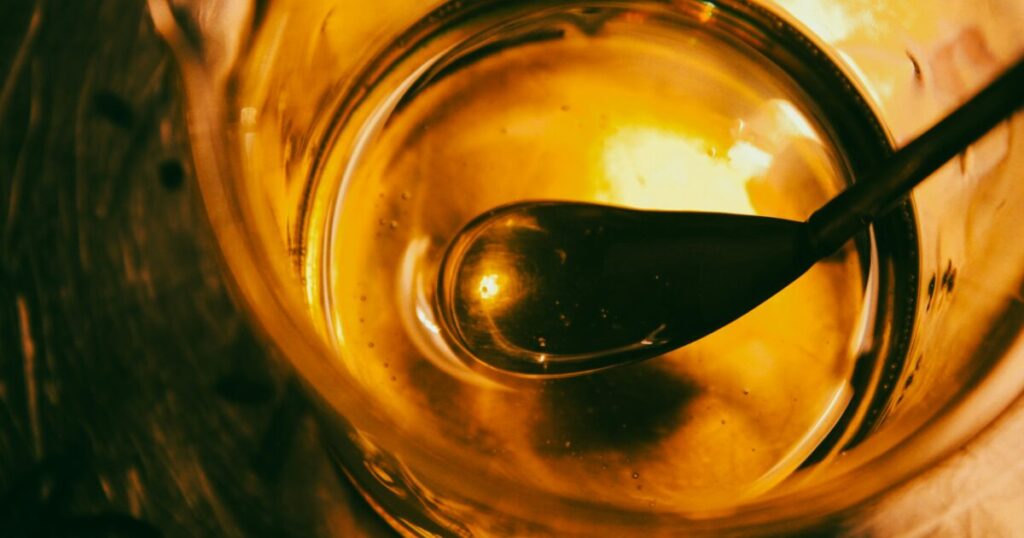
Vinegar is added third, after the foundational flavours are established. It’s more delicate than sugar or salt — heat causes it to evaporate quickly, which is why it comes later in the sequence.
Japanese rice vinegar (米酢, komezu) is milder and more rounded than many Western vinegars, with a gentle acidity that brightens dishes without sharpness. It’s essential in sunomono (酢の物) — the lightly pickled vegetable dishes that often appear as a side — and of course in sushi rice, where its balance with sugar and salt creates that distinctive flavour that’s impossible to replicate with any other vinegar.
せ(Se) — 醤油 (Shōyu / Soy Sauce)
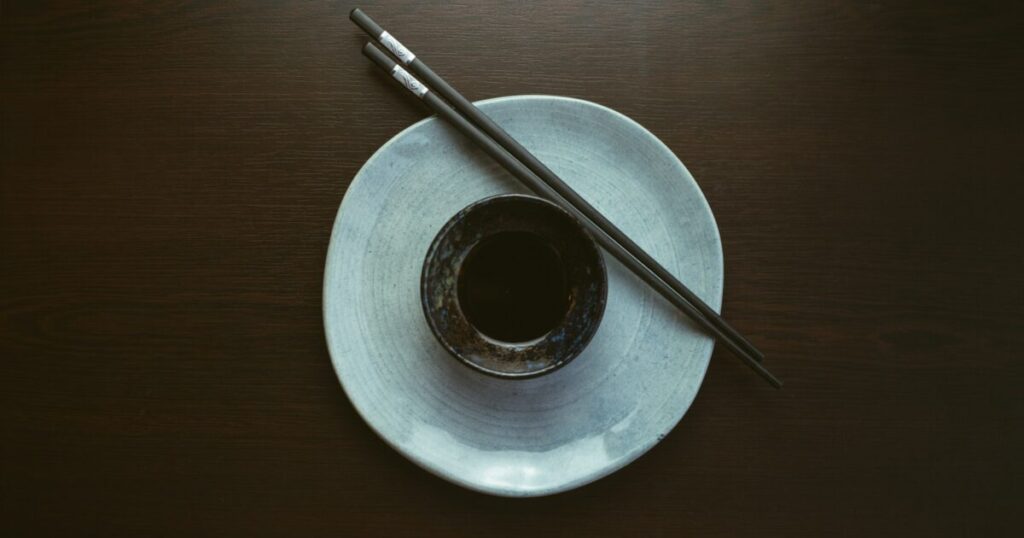
Shōyu (醤油) is probably the most internationally recognised Japanese seasoning, and for good reason — it appears in an enormous range of dishes and defines much of what people think of as Japanese flavour.
The せ in さしすせそ comes from an older spelling of the word: “せうゆ” (seuyu), which over time became しょうゆ (shōyu). It’s a small historical detail that most people don’t think about, but it’s a reminder that this mnemonic has been passed down through generations.
Soy sauce is added toward the end of cooking because its complex aroma — developed through a long fermentation process — dissipates with prolonged heat. Adding it too early means losing the fragrance that makes it so distinctive. A splash added at the right moment finishes a dish in a way that nothing else can.
そ(So) — 味噌 (Miso)
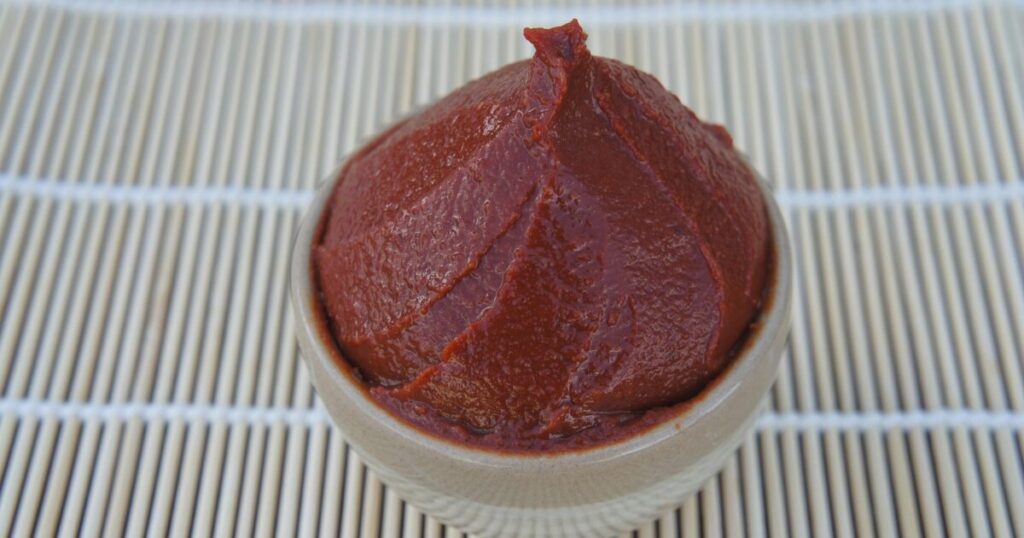
Miso (味噌) comes last, and for the same reason as soy sauce — it’s fermented, fragrant, and easily damaged by too much heat. Boiling miso soup is a common mistake that strips away much of its depth and complexity. You add the miso, stir it in gently, and serve.
Beyond miso soup (味噌汁, misoshiru), miso appears in marinades, dressings, simmered dishes, and glazes. There are many regional varieties across Japan — white miso (白味噌, shiro miso) from Kyoto, which is sweeter and milder; red miso (赤味噌, aka miso) from Aichi, which is darker and more intense; and blended varieties in between. Each has its place, and Japanese home cooks tend to have a strong preference based on where they grew up.
Why the Order Matters
The logic behind さしすせそ is practical rather than arbitrary. Sugar and salt need time to work their way into ingredients, so they go in early. Vinegar is volatile and should be added briefly. Soy sauce and miso are fermented and aromatic — their fragrance is part of what makes them valuable, and that fragrance is best preserved by adding them late.
I don’t consciously run through the list when I cook. The order has simply become instinctive — something absorbed over years of watching and cooking rather than something I actively think about. That’s probably the best way to learn anything in the kitchen.
A Framework, Not a Rule
It’s worth saying that さしすせそ is a guideline, not a rigid formula. Plenty of dishes don’t follow the order exactly, and experienced cooks adjust based on what they’re making. But as a framework for understanding how Japanese seasonings interact and why dishes are built the way they are, it’s genuinely useful.
If you’re cooking Japanese food at home and something tastes slightly off, it’s often worth thinking about when and in what order you added your seasonings. The answer is frequently there.