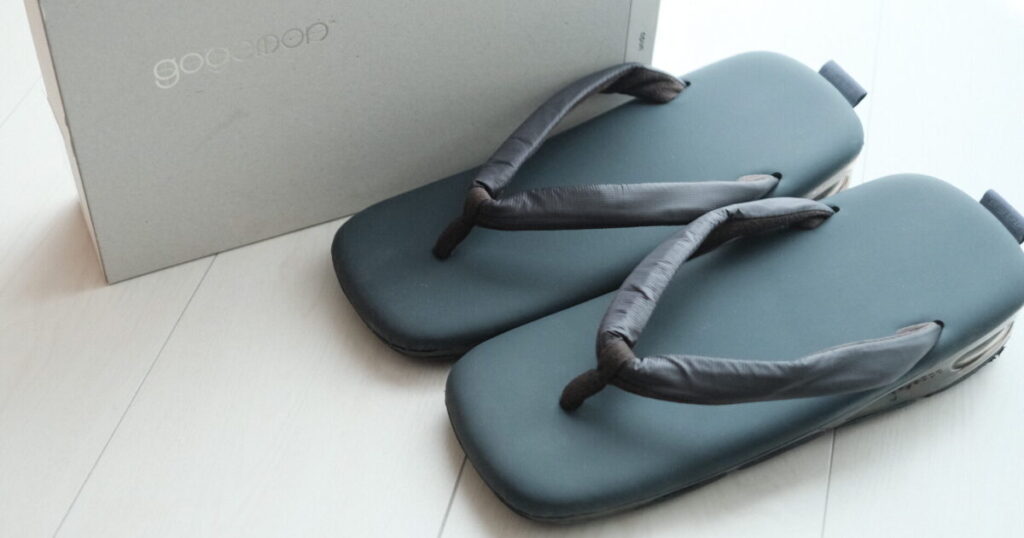
There are certain products that make you reconsider a category you thought you already understood. For me this summer, that product is a pair of sandals.
They’re called Unda, made by a Japanese design unit called goyemon, in an exclusive collaboration with United Arrows. I wore them throughout last summer paired with my Momotaro selvedge denim, and they’ve become one of those quiet seasonal companions I look forward to returning to each year.
Goyemon and the Unda
Goyemon is a Japanese design unit that describes itself as a fusion of Japanese tradition and the latest technology. The Unda is their signature product, and it embodies that idea literally — a reinterpretation of the setta (雪駄), a traditional Japanese sandal with roots going back to the 16th century, built on top of a modern sneaker midsole.
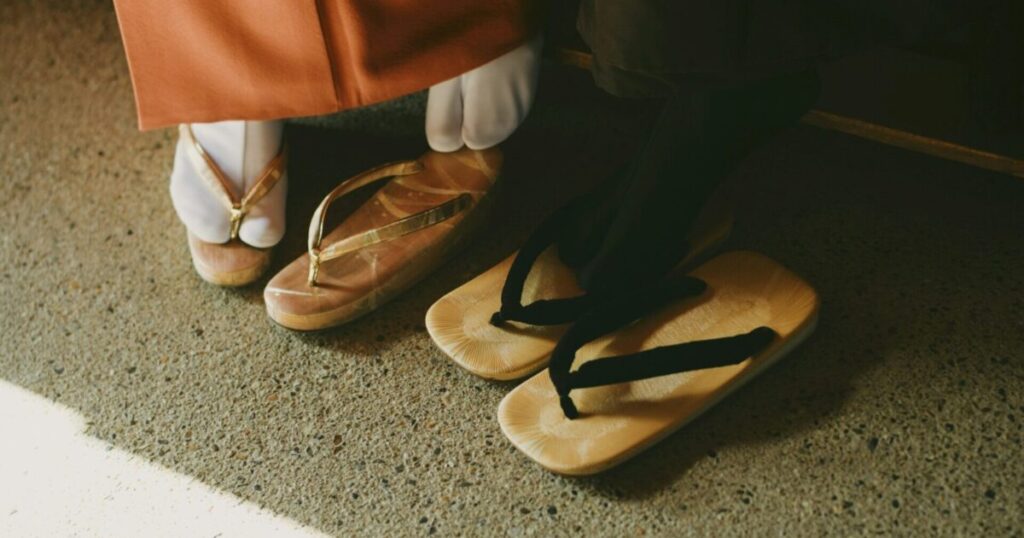
The setta has a long history in Japan — it was the everyday footwear of merchants, craftsmen, and ordinary people for centuries, valued for its practicality and flat, grounded feel underfoot. Goyemon took that traditional silhouette and fused it with contemporary cushioning technology: a PU midsole with an air sole unit to absorb shock, a low-resilience footbed that gradually conforms to the shape of your foot, and a strap with velvet fabric on the outer side and PU suede on the inner side where it contacts the skin.
The result is something that looks quietly Japanese and traditional from a distance, but performs like modern footwear when you’re actually moving through your day. The shoes were manufactured in Kyoto with support from setta makers in Nara Prefecture — two regions with deep craft traditions — which adds another layer of authenticity to what could otherwise have been just a novelty concept.
One detail I particularly like: the Unda has no left or right. Both sandals are identical, which means you can swap them regularly to ensure even wear — not unlike rotating car tyres. It’s a small, practical touch that feels very considered for something that looks this good.
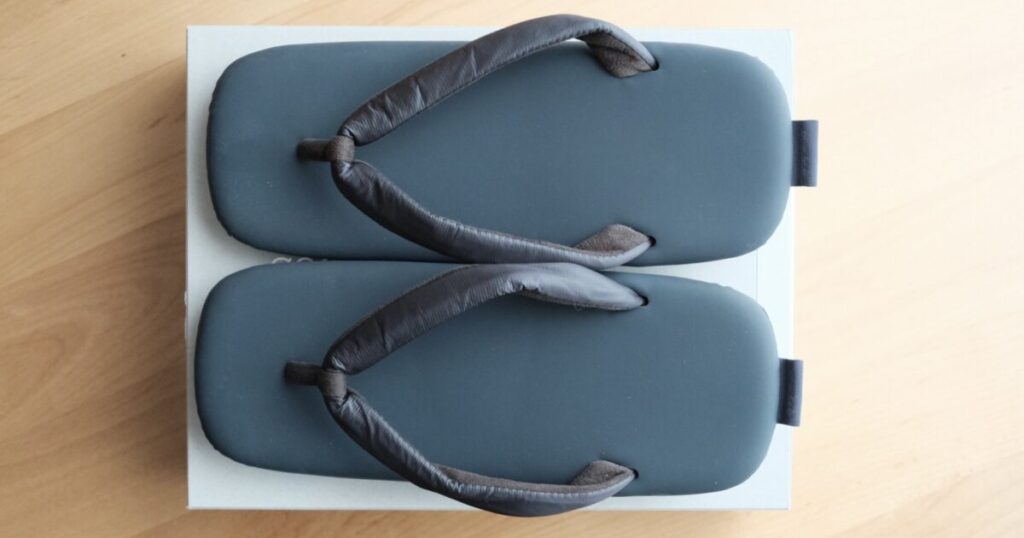
The ongoing series of collaborations with respected brands — BAPE, White Mountaineering, Snow Peak among them — suggests a quiet confidence in the concept. Goyemon isn’t reinventing the Unda each time, just finding new partners who share an appreciation for what it is. It’s the kind of brand that doesn’t need to explain itself loudly. The product does the talking.
The United Arrows Collaboration
The United Arrows version is exclusive to their stores and not available through other retailers. There was no choice of color or variation with this collaboration — what you see is what you get, which in a way makes the decision simpler.
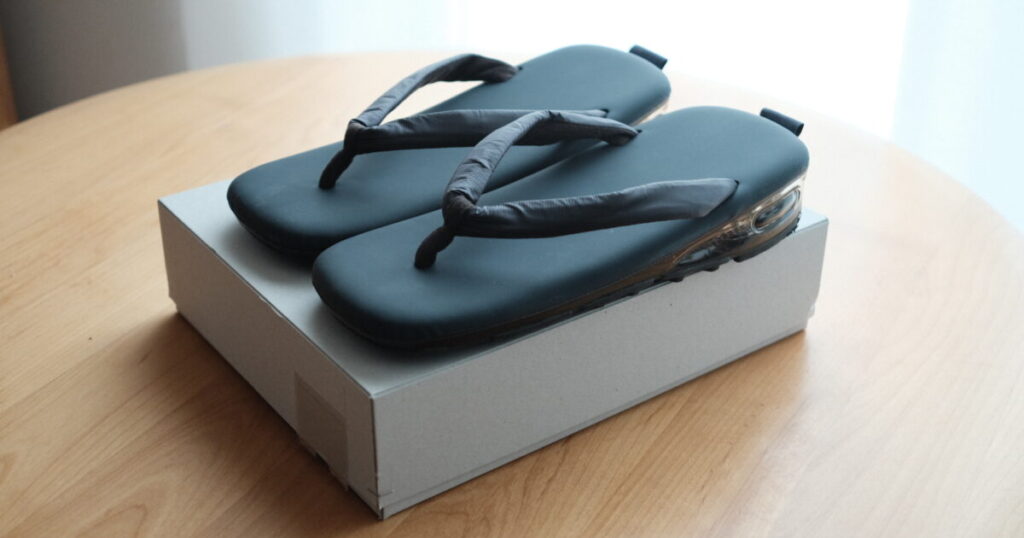
You’re not choosing between options; you’re deciding whether this is the thing for you or not. The colour is a muted, greyish tone that works particularly well with selvedge denim — the kind of understated pairing where nothing is competing for attention and everything just sits together naturally. It feels like United Arrows made a deliberate choice here, and it’s one I appreciate.
At ¥31,900, it sits at a price point that asks you to think before buying. But for a sandal you’ll reach for every single day through an entire Japanese summer, that figure starts to make sense quite quickly. It’s still cold outside as I write this, so the Unda are back in their box for now — but only until the weather turns. I wore them throughout last summer and they’ve already earned their place as a seasonal staple.
The first few wears felt a little unfamiliar. The combination of the traditional flat setta shape with the cushioned modern sole creates a sensation that takes some getting used to — your foot sits differently than it does in a typical sandal or shoe. But that initial strangeness settles quickly. After a few outings the footbed begins to conform to the shape of your foot, and what once felt interesting starts to feel completely natural. By midsummer I barely thought about them at all — which is exactly how good footwear should work.
Now, feeling the first hints of spring in the air, I find myself looking forward to taking them out again. There’s something satisfying about a seasonal piece you already know and trust.
How I Wear Them
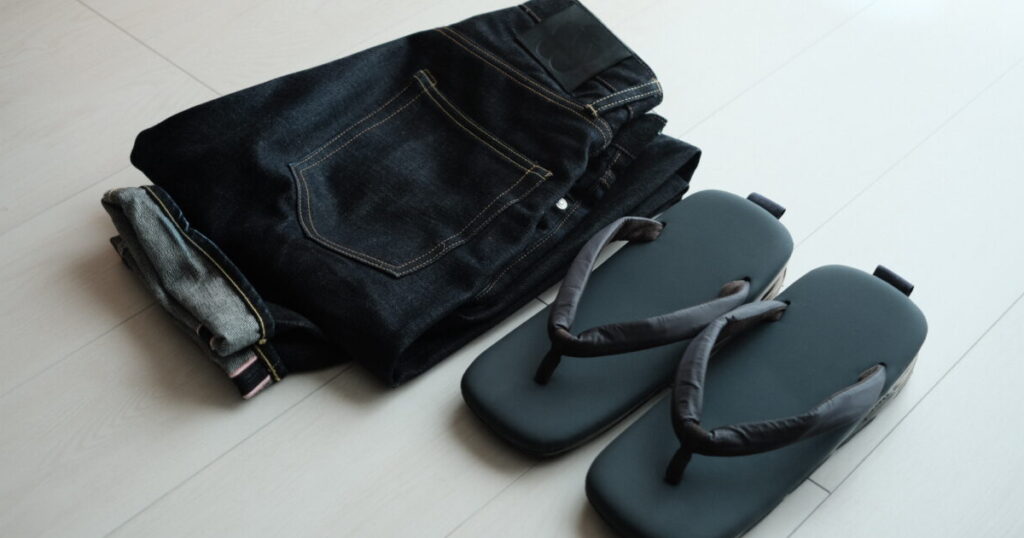
My go-to combination is Unda with Momotaro selvedge denim — rigid, dark indigo jeans with a straight fit. The contrast works well: the Unda has a quiet, crafted quality that complements the denim without competing with it. Both are Japanese, both have a story behind them, and neither is trying too hard.
They work equally well with lighter summer trousers or shorts on the weekends. The silhouette is minimal enough to pair with most things, but distinctive enough that people occasionally notice and ask about them.
Final Thoughts
The Unda is not for everyone. It has a specific look, a specific feel, and a price that reflects the craftsmanship behind it. But if you spend your summers in Japan and you’re looking for a sandal that carries some history, fits well after a brief break-in period, and pairs naturally with the kind of clothes you already love — it’s difficult to find something better.
For me, it’s already become one of those purchases I don’t second-guess. A reliable summer companion, quietly rooted in Japanese tradition, and comfortable enough that after a short break-in you forget you’re wearing sandals at all.