There are things you stop doing as you grow up. Not because you decide to — you just drift away from them, season by season, without noticing. Watching fireflies was one of those things for me.
When I was a child, early summer meant one thing in my family: Hotaru (蛍, fireflies). Every year, my parents would take me to a nearby park after dark to watch them. I don’t remember us ever missing a year. It felt as certain as the season itself.
Then adulthood happened. Busy schedules, different priorities. Years passed without a single firefly.
Eventually I went back — and this year marks four years in a row at that same park.
What Is Hotaru?
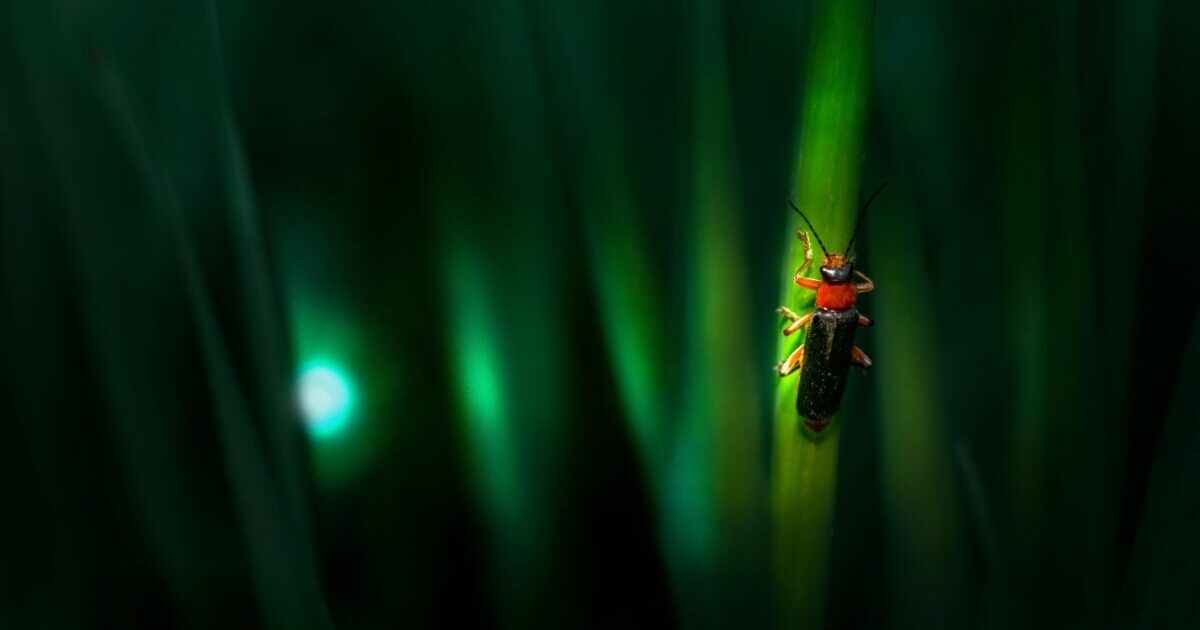
Hotaru (蛍) is the Japanese word for firefly. They are small bioluminescent insects that appear during the early summer months and are often associated with beauty, transience, and nostalgia in Japanese culture.
Japan has three main kinds of firefly, the two most common being Genji-botaru (源氏蛍) and Heike-botaru (平家蛍) — names that carry their own history, after rival clans from the Heian period. One thing that sets Japanese hotaru apart is that they live in water during the larval stage, an unusual trait for an insect. Genji-botaru larvae live in clean streams; Heike-botaru inhabit rice fields and still water. Because they need unpolluted water to survive, their numbers are a quiet but reliable indicator of how healthy a local environment actually is.
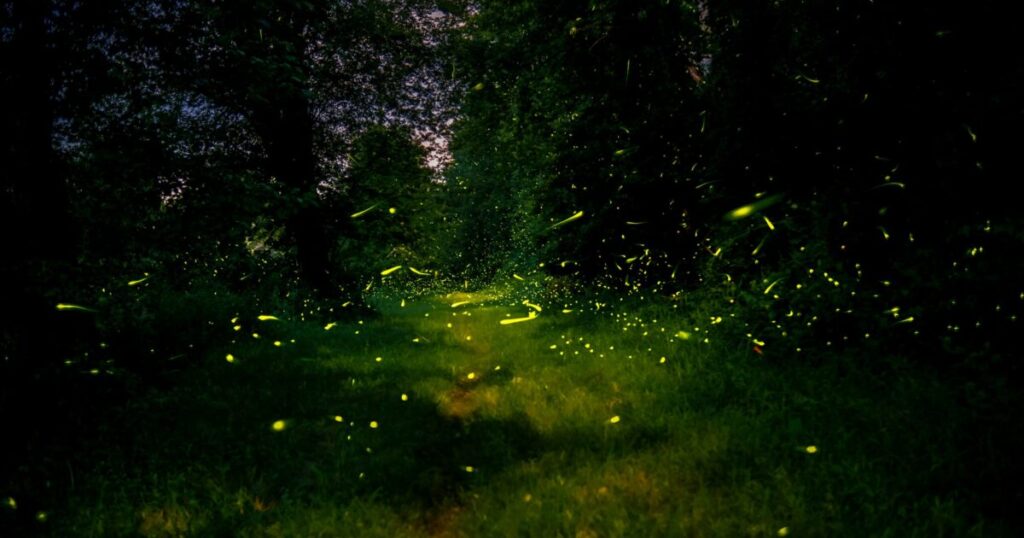
The season itself is short and depends heavily on the region — generally somewhere between late spring and mid-summer. Miss the window in a given spot and you wait another year. The fireflies do not care about your calendar, and neither, it turns out, do they care much about ours.
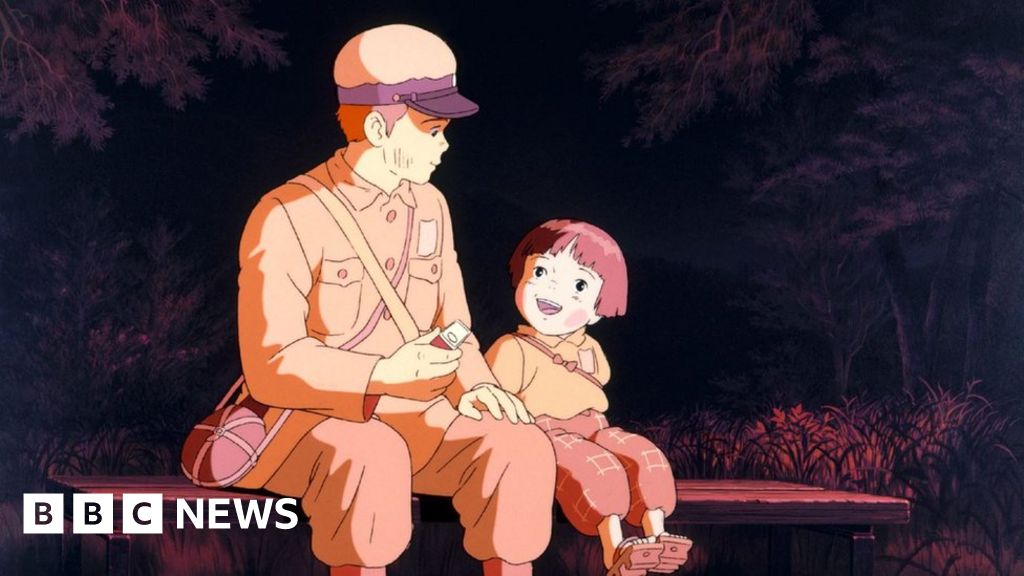
If the name feels familiar, it might be through Grave of the Fireflies (火垂るの墓, Hotaru no Haka) — the 1988 Studio Ghibli film that made an entire generation associate these small lights with something heartbreaking and irreplaceable.
A Single Firefly
I’ll be honest: this year was not the spectacle of my childhood memory.
We arrived at the park just after sunset — my partner and I, the hum of summer insects already filling the air. The path along the water was dark, which is how it needs to be. Fireflies are shy about light pollution. You have to meet them on their terms.
We waited.
And then — one. A single pulse of cold green light over the reeds. There, then gone. Just one firefly.
It sounds like disappointment, and in some ways it was. But there was something about that single, unhurried light moving through the dark that made the night feel worth it anyway. It wasn’t performing for anyone. It was simply doing what fireflies do, indifferent to whether anyone was watching.
The feeling it gave me is hard to name in English. In Japanese, the word hakanai (儚い) comes close — fleeting, ephemeral, beautiful precisely because it won’t last.
Fewer Fireflies, and Maybe the Wrong Timing
Standing in that park, I noticed something beyond my own nostalgia: there genuinely seemed to be fewer fireflies than when I was young — and noticeably fewer people too, compared to previous years. This will be my fourth year in a row visiting this same park, so the contrast wasn’t just a vague impression. I know what a good night here normally looks like.
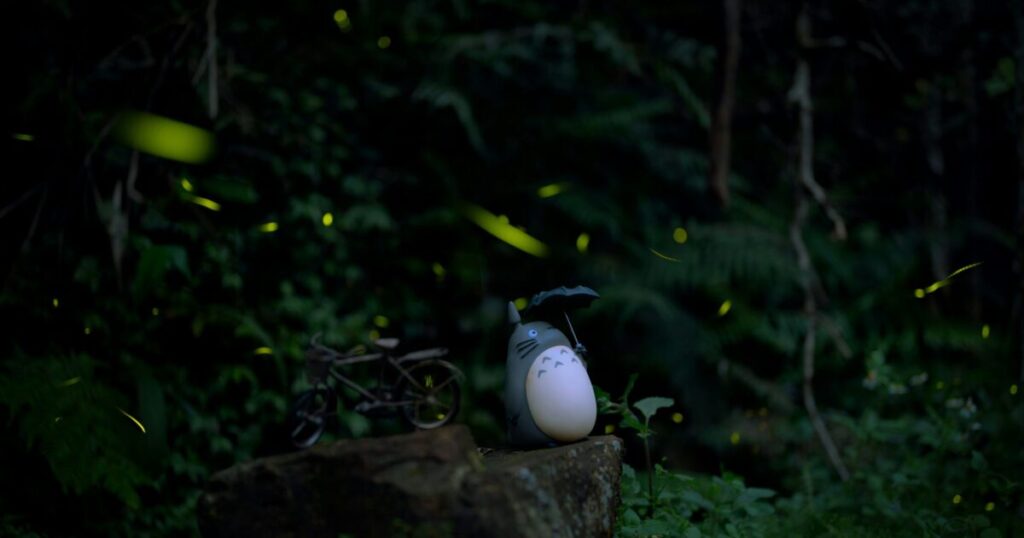
Some of that is likely just timing. The window for any given spot is narrow, and we may simply have gone a little early or a little late this year, on the wrong side of the peak. But the decline isn’t purely anecdotal. Genji-botaru in particular need very specific conditions — clean, slow-moving freshwater, muddy banks, real darkness — and urbanisation, concrete drainage channels, and light pollution have quietly eroded those conditions across Japan over the decades.
The fireflies that remain tend to be concentrated wherever someone — a local preservation group, a municipality, a single farmer — has actively protected the habitat. The park I went to is one of those places. That protection is probably the only reason there was a firefly to see at all.
If You Want to See Fireflies in Japan
- Timing:
Generally late spring through mid-summer, with the exact peak varying by region and even by year — warmer southern areas tend to peak earlier, cooler northern areas later. Check local listings close to the date rather than relying on a fixed calendar window.
- Where to look:
Rivers and streams with clean water, rice paddies, wetland parks. Many municipalities host informal or semi-organised hotaru viewing evenings during the season — worth searching for locally rather than assuming a major tourist spot will be the best option.
- What to bring:
Dark clothing, no flashlights or phone screens once you’re near the water, and patience. Silence helps too — both for the fireflies and for everyone else who came to watch in quiet.
- What to expect:
On a good night, dozens of lights rising from the water. On a quiet night, maybe just one. Either way, you’ll likely remember it.
A Final Thought
A few weeks from now, the fireflies will be gone. The park will look exactly the same in daylight — ordinary grass, ordinary water. There will be no sign that anything happened there at all. That’s the nature of hakanai things. They leave nothing behind except the memory of the people who showed up to see them.
I’m glad I went back this year. And I already know I’ll be back again next year — same park, same dark path, however many fireflies decide to show up.
This is the first post in a short summer series — more on the season, its traditions, and the small things worth knowing about it, coming soon.