The second day started at 5am — not by alarm, but by horses.
Morning at Versailles Farm
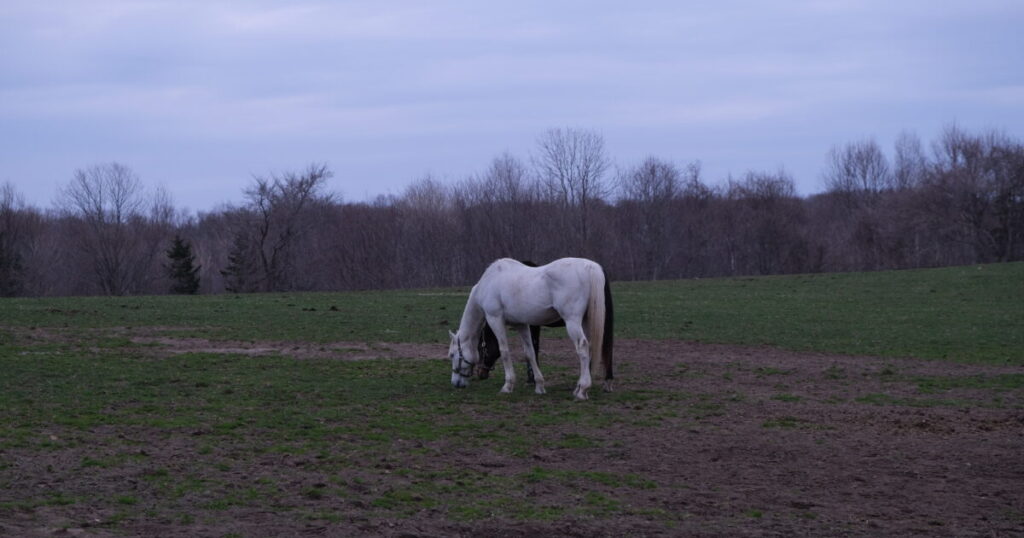
Staying in the trailer house means the pasture is right outside your door — and the horses know it. Around 5am, a group of them had gathered around the trailer, clearly hoping for carrots. We stepped outside, coffee in hand, and spent about thirty minutes feeding them and taking in the morning. There’s something about being with animals at that hour, coffee warming your hands and horses nudging at your pockets, that’s difficult to beat.
After the carrots were gone, we strolled around the farm to see how each horse spends their morning before the farm opens to visitors. Being able to witness the horses in the early morning — their quiet routines before the day begins — is an experience entirely outside the ordinary, and one that is only possible by staying here. A privilege that comes with the accommodation.
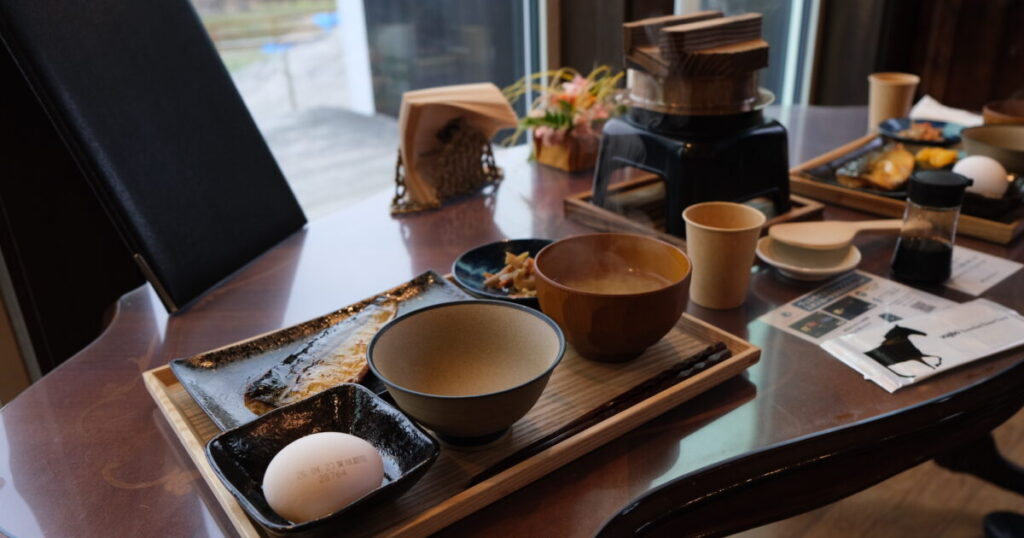
Breakfast followed at the farm’s café — a proper Japanese-style meal — and then we said goodbye and headed north toward Sapporo.
Ramen in Chitose
On the way north toward Sapporo, we made a stop in Chitose for ramen — specifically at IOrI (イオリ), a well-regarded spot that has made the Tabelog Hokkaido Ramen Top 100 list. Run by a chef who trained under the legendary Sumire school of Sapporo miso ramen, it’s the kind of place worth going out of your way for.
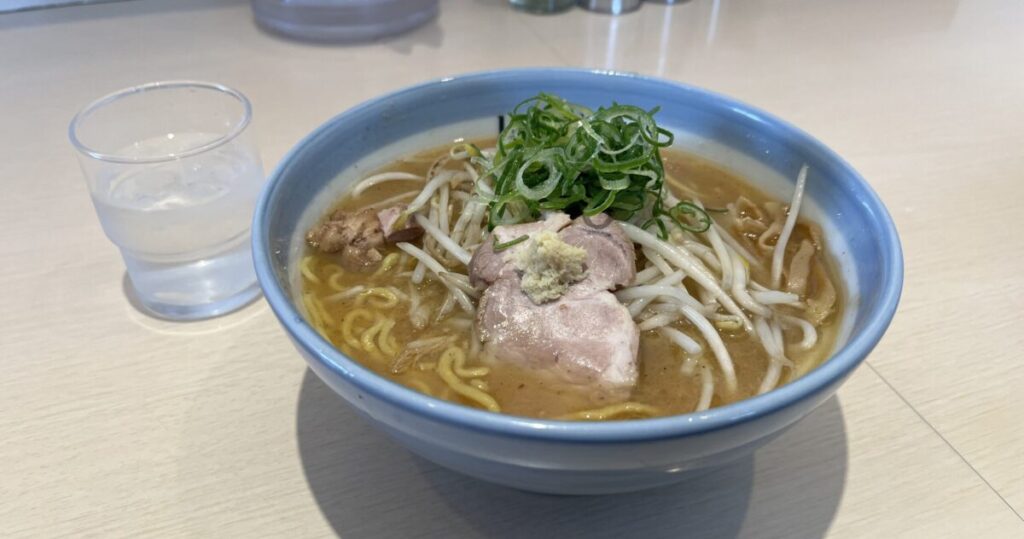
Hokkaido ramen is its own category, and within Hokkaido itself there are distinct regional styles worth knowing. Sapporo is known for miso (味噌), rich and deeply flavoured, often finished with butter and corn. Asahikawa is shoyu (醤油) — a clear, soy-based broth with a more delicate character. Hakodate is shio (塩) — the lightest of the three, a clean salt broth that lets the soup itself do the talking. These are generalisations, but reliable ones. A bowl mid-morning, after an early start with the horses, felt entirely justified.
The Hill of the Buddha
From Chitose, the next stop was the most architecturally significant of the entire trip: the Atama Daibutsu (頭大仏) — Hill of the Buddha, located within Makomanai Takino Cemetery on the southern outskirts of Sapporo.
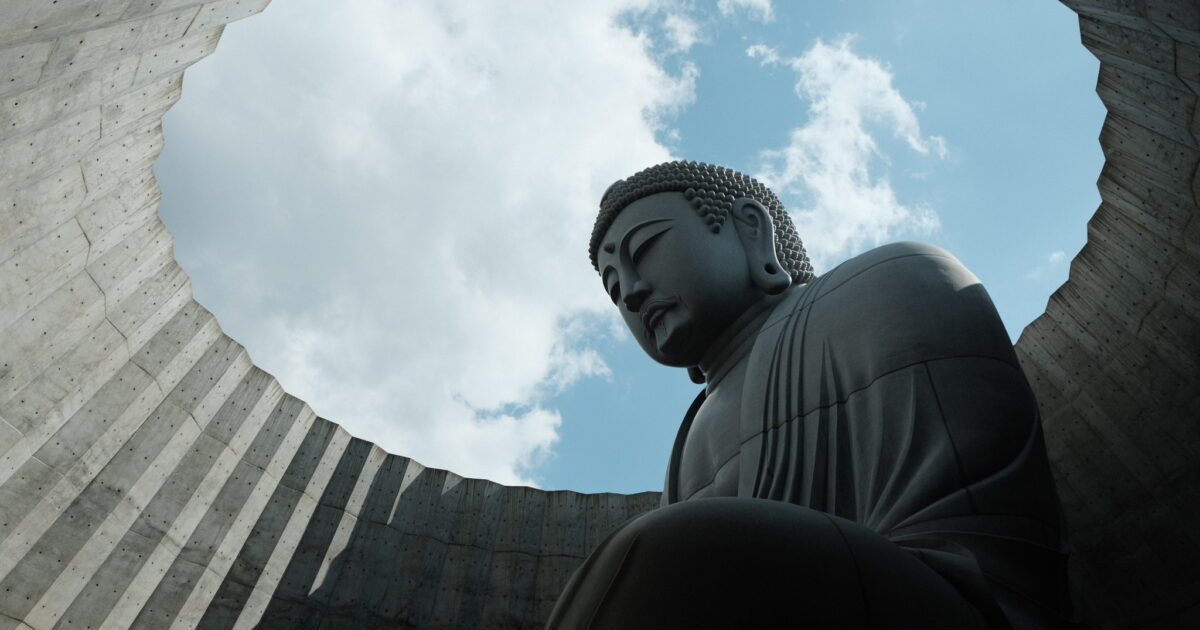
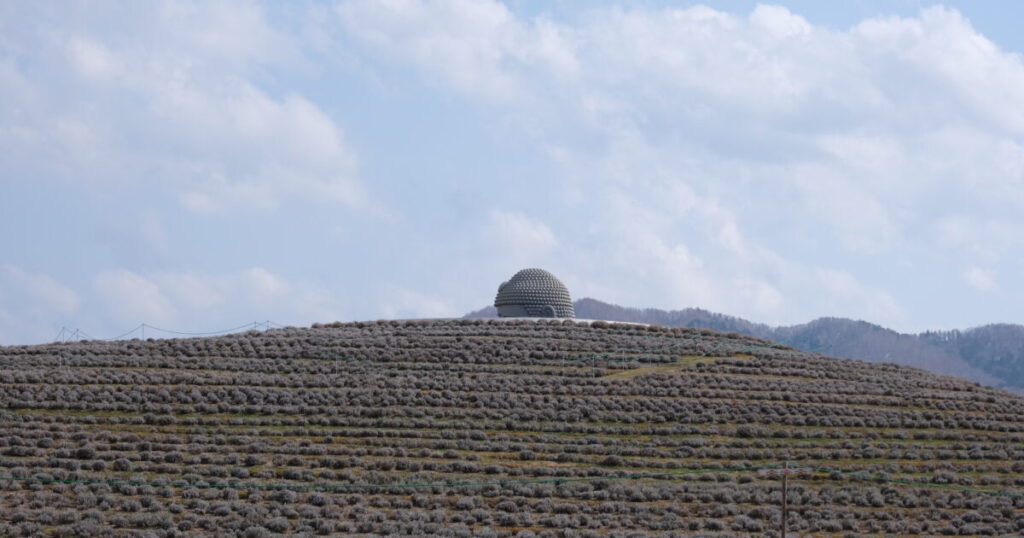
Designed by the architect Tadao Ando and completed in 2016, the concept is deceptively simple: a 13.5-metre Buddha statue enclosed within a dome, itself buried beneath a lavender-covered hill, so that from the outside only the head of the Buddha is visible above the landscape. The name — 頭大仏, literally “head Buddha” — comes directly from this.
To reach the statue you pass through a water garden (水庭, mizuniwa) — designed to cleanse the mind and mark the transition from the everyday to the sacred — and then through a curved concrete tunnel that gradually brings the full figure into view. The effect is extraordinary. You emerge from the tunnel into an open space of quiet and light, the Buddha towering above, the sky visible through an oculus in the dome above its head.
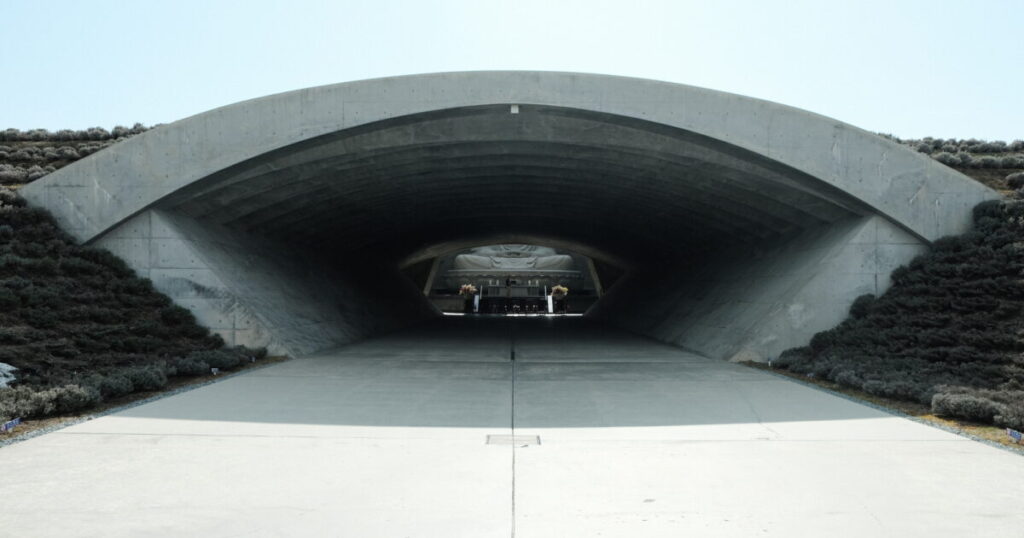
Ando has said that the design was inspired by his experience of looking up at Buddhist statues glittering in the dim sunlight of caves in India and China. Standing there, that reference makes complete sense. It’s one of the most considered pieces of architecture I’ve encountered in Japan, and the fact that it sits within a working cemetery — a genuinely sacred space — gives it a weight that a conventional gallery or museum couldn’t replicate.
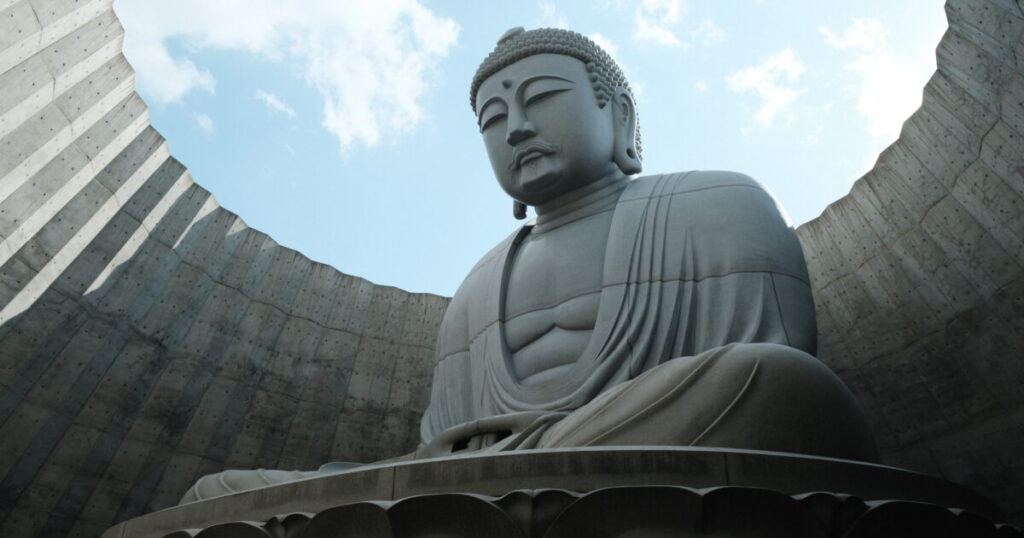
In midsummer the hill is covered in 150,000 lavender plants in full bloom. Being there in late April, the lavender hadn’t yet flowered — but the fresh spring green of the hill against the concrete and sky was beautiful in its own right.
Interestingly, 頭大仏 has become far more popular with international visitors than domestic ones — reportedly around 90% of annual visitors are from overseas, drawn by the images that have circulated widely on social media. It’s a rare case of a relatively new building achieving genuine iconic status almost entirely through word of mouth.
Jingisukan and 締めパフェ in Sapporo
After the 頭大仏 we checked into Solaria Nishitetsu Hotel Sapporo — conveniently located close to Sapporo Station and within walking distance of Susukino, Sapporo’s entertainment district where both dinner and dessert were already booked.
The proximity made the evening easy. We walked to Sapporo Jingisukan Honten for dinner — no need for a taxi, no planning required beyond putting on shoes and heading out.
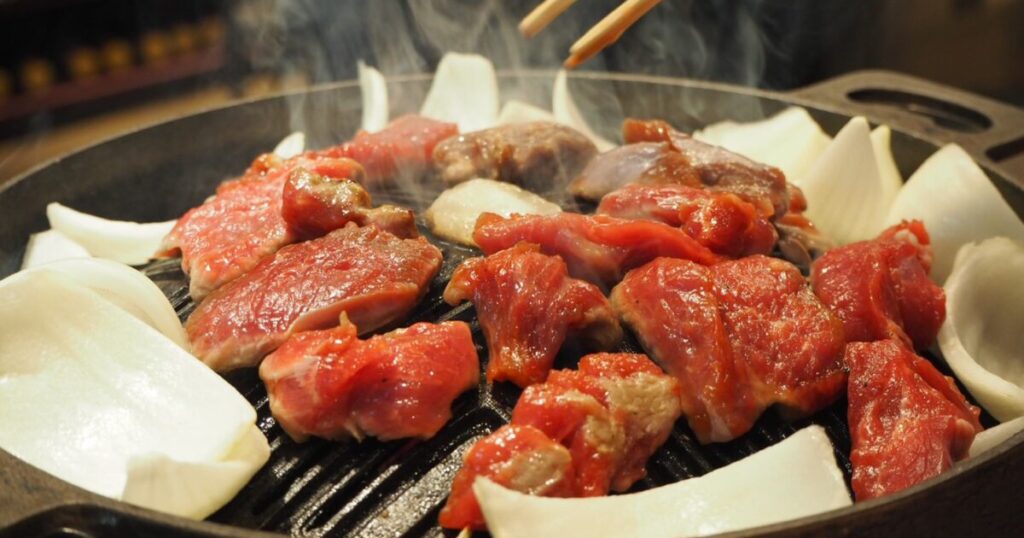
Named after Genghis Khan, this Hokkaido specialty is thinly sliced mutton grilled on a domed iron plate, eaten with vegetables and dipped in a soy-based sauce. It’s a completely different experience from the Yakitori or Yakiniku you’d find in Tokyo — earthier, more robust, and entirely Hokkaido in character.
The way to eat it properly is worth knowing.
Place the meat in the centre
The centre of the dome is the hottest part. Start by placing the mutton here so it cooks quickly and its fat and juices begin to run downward
Arrange the vegetables on the shoulder
Place your vegetables around the edge of the dome. They’ll sit here while the meat cooks above, waiting for what comes next.
Wait for the oil to accumulate
As the meat cooks, fat and juices run down toward the vegetables. Let it build up. Once enough oil has collected, the vegetables begin to cook in it — closer to deep frying than steaming — becoming rich and deeply flavoured in a way they never could be otherwise.
Manage both at once
From here it’s about timing — keeping the meat going in the centre while watching the vegetables at the shoulder. Getting this balance right is part of what makes jingisukan such an enjoyable, interactive meal.
And then — because dinner alone is never quite enough in Sapporo — Shime Pafe (締めパフェ).
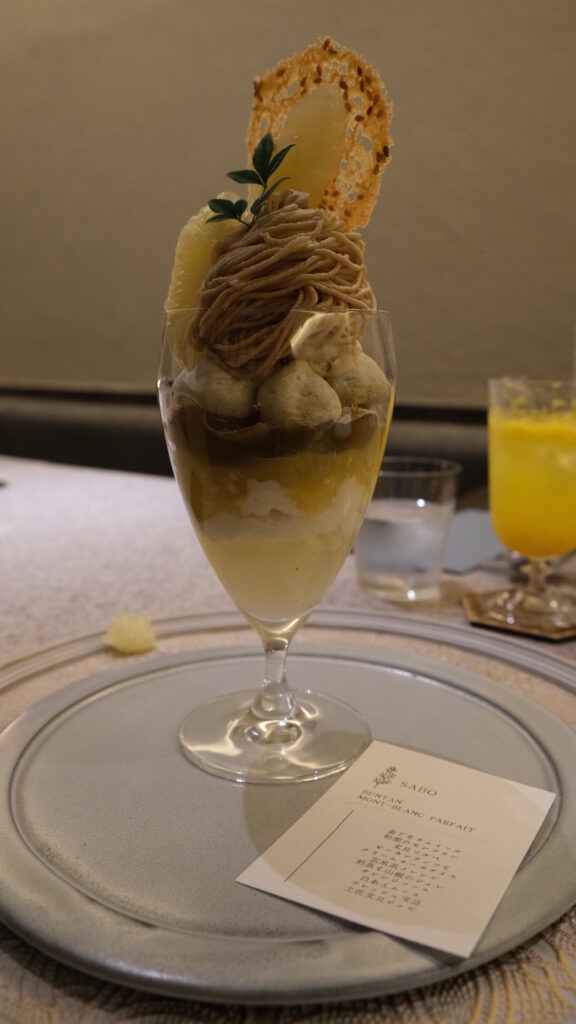
The concept of ending a night out with a parfait rather than a late-night bowl of ramen is a Sapporo invention. The parfait here are serious, elaborate constructions — carefully layered, precisely assembled, not at all the casual dessert the word might suggest. It’s a sweet, cold, surprisingly satisfying way to end a long day. And it is very much a Sapporo thing.
Day 3: Onigiri for breakfast, Hokkaido sweets, the Hōheikan, soup curry, and the flight home.