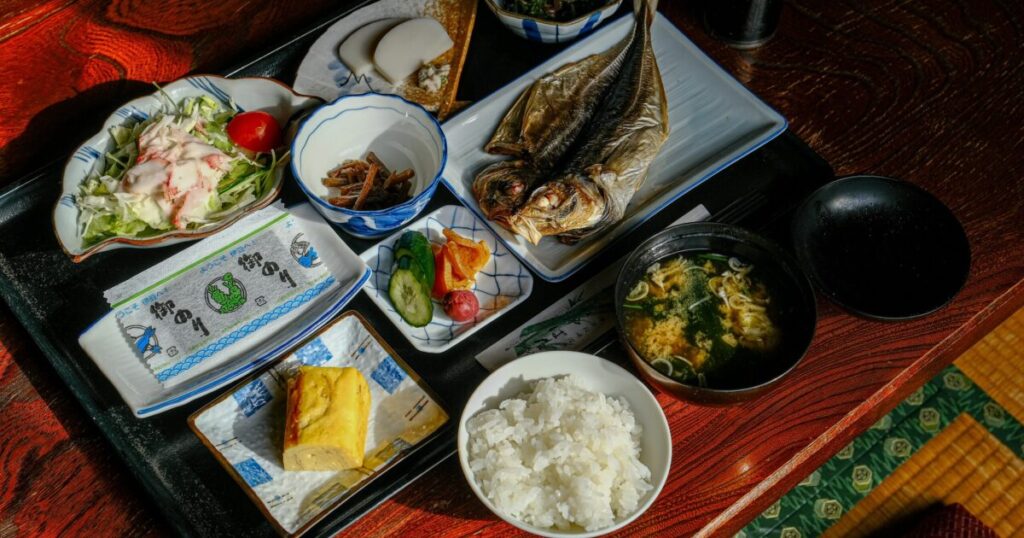
One of the most common questions I see online about Japan is some version of: what do Japanese people actually eat every day? Not the food you see in travel videos or restaurant guides — the real, unglamorous, Tuesday-night version. I can only speak for myself, but here’s an honest look at what eating actually looks like in my life.
Breakfast: Small and Intentional
Japanese breakfasts can look very different from household to household.
I wrote about this in my first post, but breakfast for me right now is overnight oats with fruit. It’s part of a conscious effort to eat a little better and take care of myself. Simple, filling, and ready before I even wake up properly.
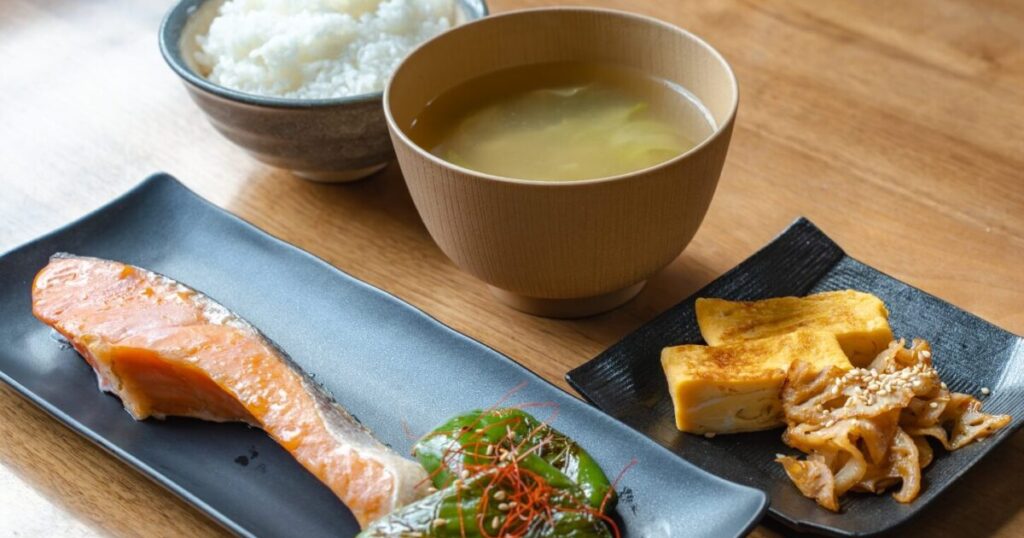
Some families do the traditional spread — rice, miso soup, a piece of grilled fish, pickles. But that kind of breakfast takes time and effort to prepare, and it shows. It tends to be more common in households where someone has the time and willingness to stand in the kitchen before the day has properly started. For everyone else, it’s toast and coffee if you’re lucky, or honestly nothing at all — just a rush out the door and a vague plan to eat something later.
There’s no single “Japanese breakfast.” It’s whatever fits your morning, your schedule, and how much you’re willing to do before 8am.
Lunch: Whatever the Canteen Is Serving
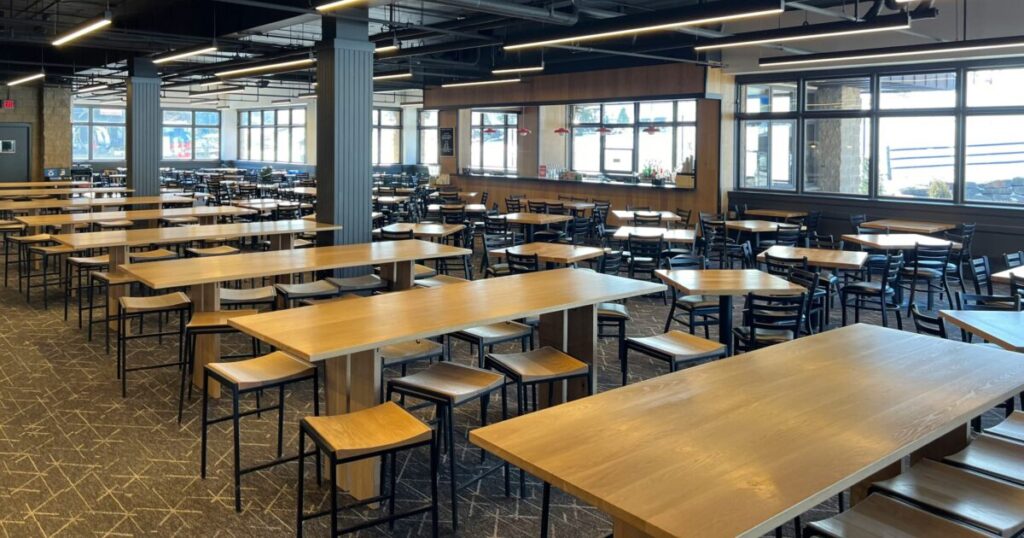
On weekdays, lunch for me is decided by the company canteen menu. The canteen is called shokudo (食堂) in Japanese — and this setup is probably more common than people realize. Many workplaces in Japan have a shokudo where employees can eat a hot, subsidized meal for a few hundred yen. The menu rotates daily — teishoku (定食)-style sets with rice, miso soup, a main dish, and an optional side are the backbone, but you’ll also find ramen, udon, or soba on rotation. Sometimes something a little more unexpected too, like a collaborative menu put together with a popular local restaurant.
You don’t always love what’s on offer, but you eat it. There’s something oddly comforting about that — lunch as a non-decision. One less thing to think about in the middle of a busy day.
That said, a shokudo is more common at larger companies. In Tokyo especially, where restaurants and takeout options are everywhere within walking distance, many office workers head out for lunch instead — grabbing something from a nearby restaurant, a convenience store, or a takeout spot. The city makes that easy in a way that smaller towns simply don’t.
Dinner: Where the Seasons Come In
So far, if you’ve been reading this thinking — where’s the Japanese food? — I understand. Overnight oats for breakfast, a rotating canteen menu for lunch. It doesn’t exactly scream Japan.
But here it comes. Dinner is where I actually cook, and honestly, it’s the meal I look forward to most. It’s also where the seasons and Japanese food culture show up in full. What I make changes significantly depending on the time of year. Right now, in the colder months, dinner at my house is almost always nabe (鍋).
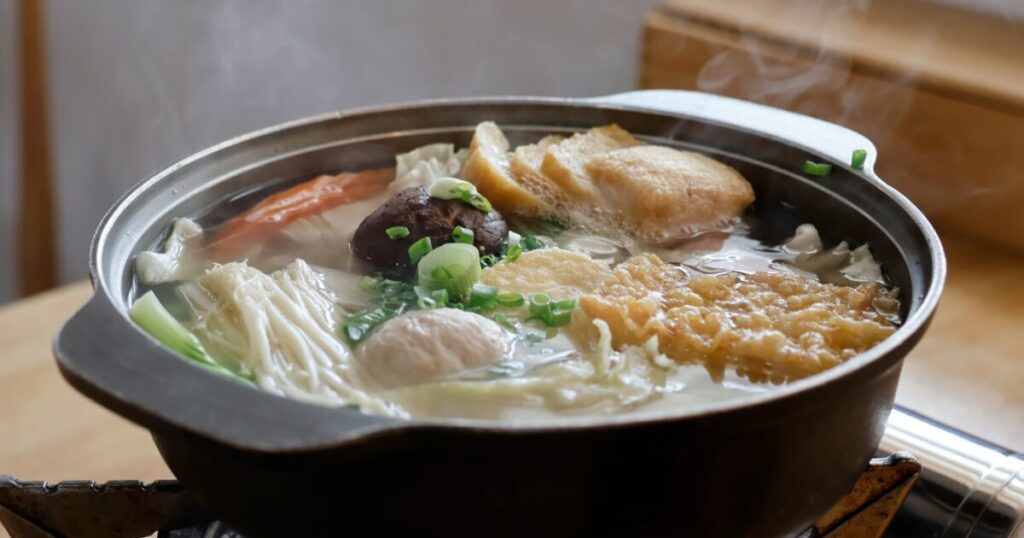
If you’re not familiar, nabe is a hot pot dish — a pot of broth simmering on the table, into which you add vegetables, tofu, meat or fish, and whatever else you like. Everyone eats from the same pot, picking out what they want and dipping it into ponzu (ポン酢) or sesame sauce. It’s warming, communal, and endlessly adaptable. You can make it light and delicate with a kombu (昆布) dashi (出汁) base, or rich and hearty with miso or kimchi broth. We probably have it several times a week through winter and I don’t get tired of it.
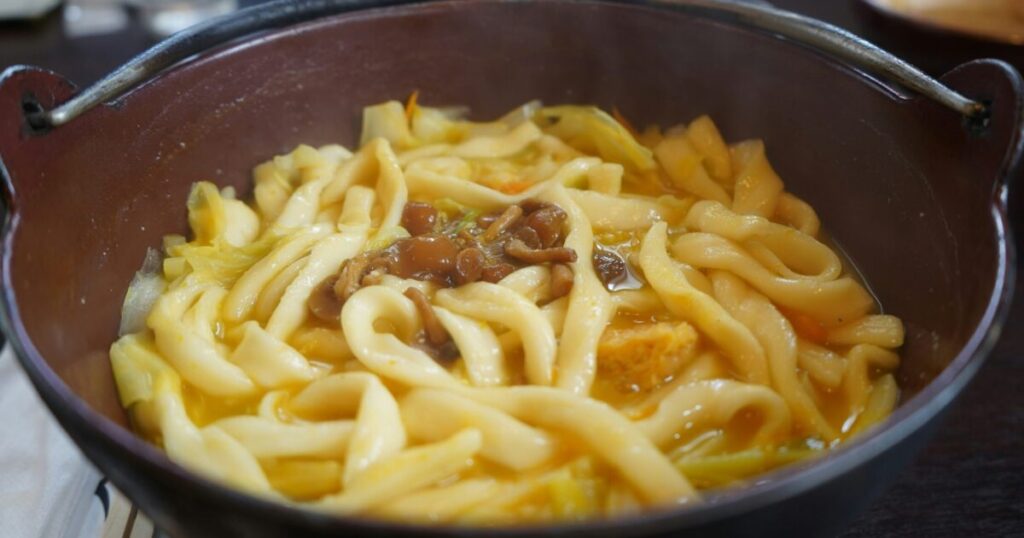
Another dish I make regularly in winter is houtou (ほうとう) — a specialty from Yamanashi prefecture that isn’t as well known nationally as nabe but is deeply comforting in its own way. It’s a thick, flat udon-like noodle simmered in a rich miso-based soup with kabocha (かぼちゃ) pumpkin, root vegetables, and often pork or chicken. The kabocha practically melts into the broth and gives it a natural sweetness. It’s the kind of dish that makes you feel warm from the inside out.
As the seasons change, so does what ends up in the pot — or whether there’s a pot at all. Spring and summer bring lighter meals: chilled tofu, salads with Japanese dressings, grilled vegetables, cold soba. I’ll write more about those when the weather turns.
Eating Out: Once a Week, Wherever Feels Right
I often eat out on a weekend, and where I go varies completely depending on mood, the day.
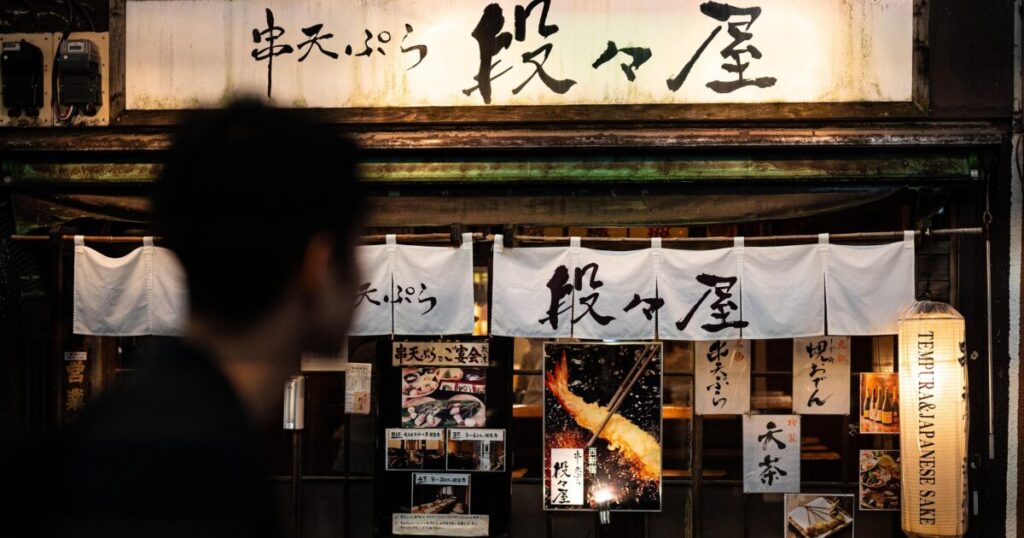
Sometimes it’s ramen (ラーメン) — a bowl of rich tonkotsu or a lighter shoyu broth, eaten quickly at the counter. Sometimes it’s a neighborhood izakaya (居酒屋) where you order small dishes and share them slowly over a couple of hours. Sometimes it’s something completely different: curry, sushi conveyor belt, a local teishoku restaurant. There’s no pattern to it, which is part of what makes it feel like a treat rather than a habit.
Eating out in Japan doesn’t have to be expensive or special. Some of my most satisfying meals have been at small, unglamorous lunch spots where the menu is handwritten and the set meal costs less than 1,000 yen.
What This All Adds Up To
Looking at my week as a whole, the picture is pretty simple: home cooked meals most of the time, seasonal ingredients that shift naturally throughout the year, and the occasional meal out when we feel like it.
It’s not particularly exciting from the outside. But there’s a kind of contentment in a food life that follows the rhythm of the seasons — knowing that nabe weather will eventually give way to cold noodle weather, and that both have their time.
That’s probably the most honest answer to what Japanese people eat daily. Not elaborate. Not always photogenic. Just food that fits the season, the mood, and whatever life looks like that week.
Next time I’ll be sharing some Japanese products I genuinely love and use. Stay tuned.
